Start with the outing you can enjoy today
Neighborhood discovery can mean following several blocks of changing sights, or spending twenty minutes noticing what happens from one comfortable place. Neither choice is the better outing. A walking route offers variety and a sense of journey; an observation spot gives everyone time to look closely. The useful question is not how far your family can go, but what kind of attention and movement feels manageable today.
Before leaving, check in on three things: time, energy and access. Is there room in the day for travel to and from the starting point? Does anyone need frequent breaks, a predictable return time or a place to sit? Would a stroller, mobility aid or young walker be comfortable on the planned surface? These questions help you choose a plan that invites curiosity instead of turning the outing into a test of endurance.
Choose a route when change is part of the fun
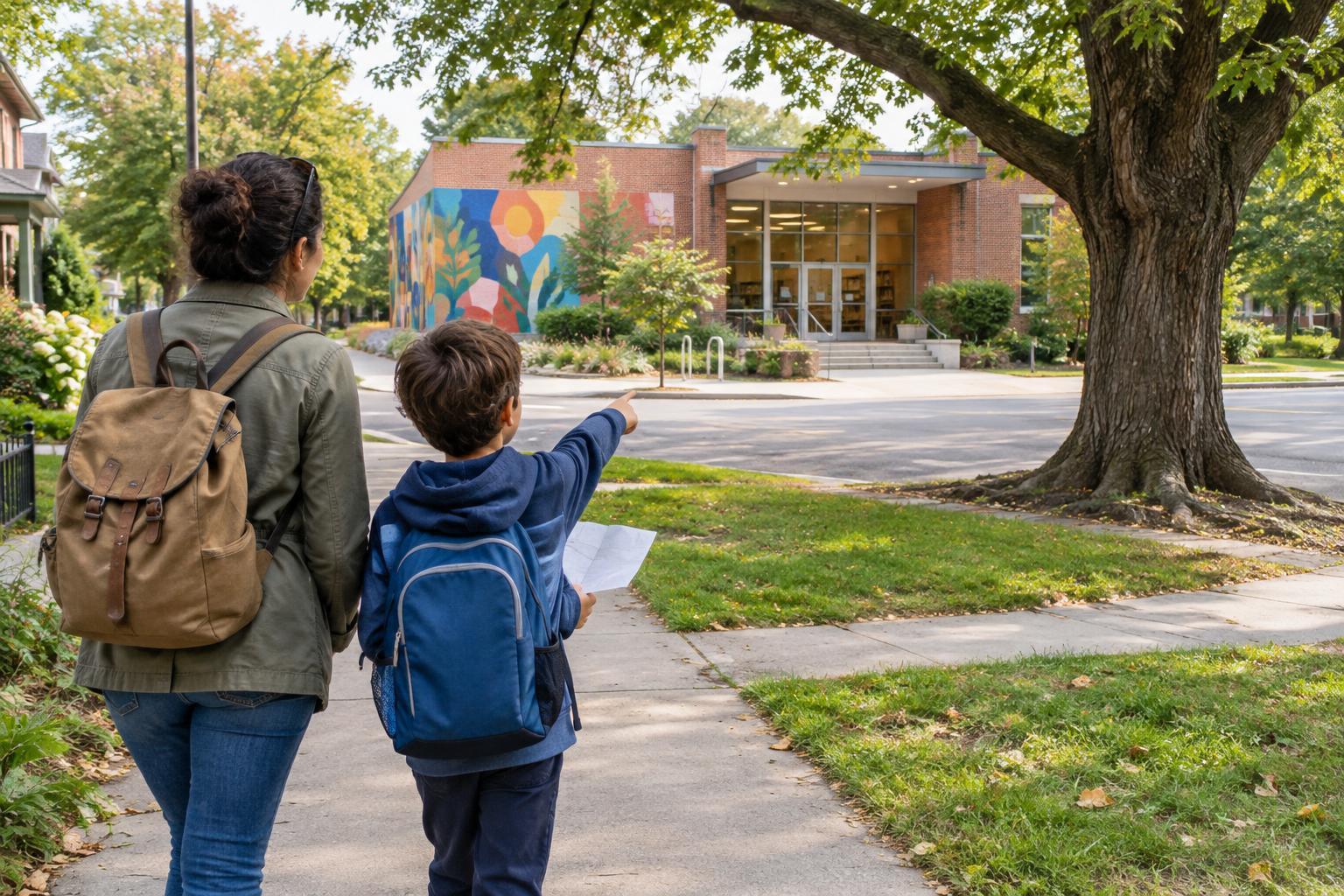
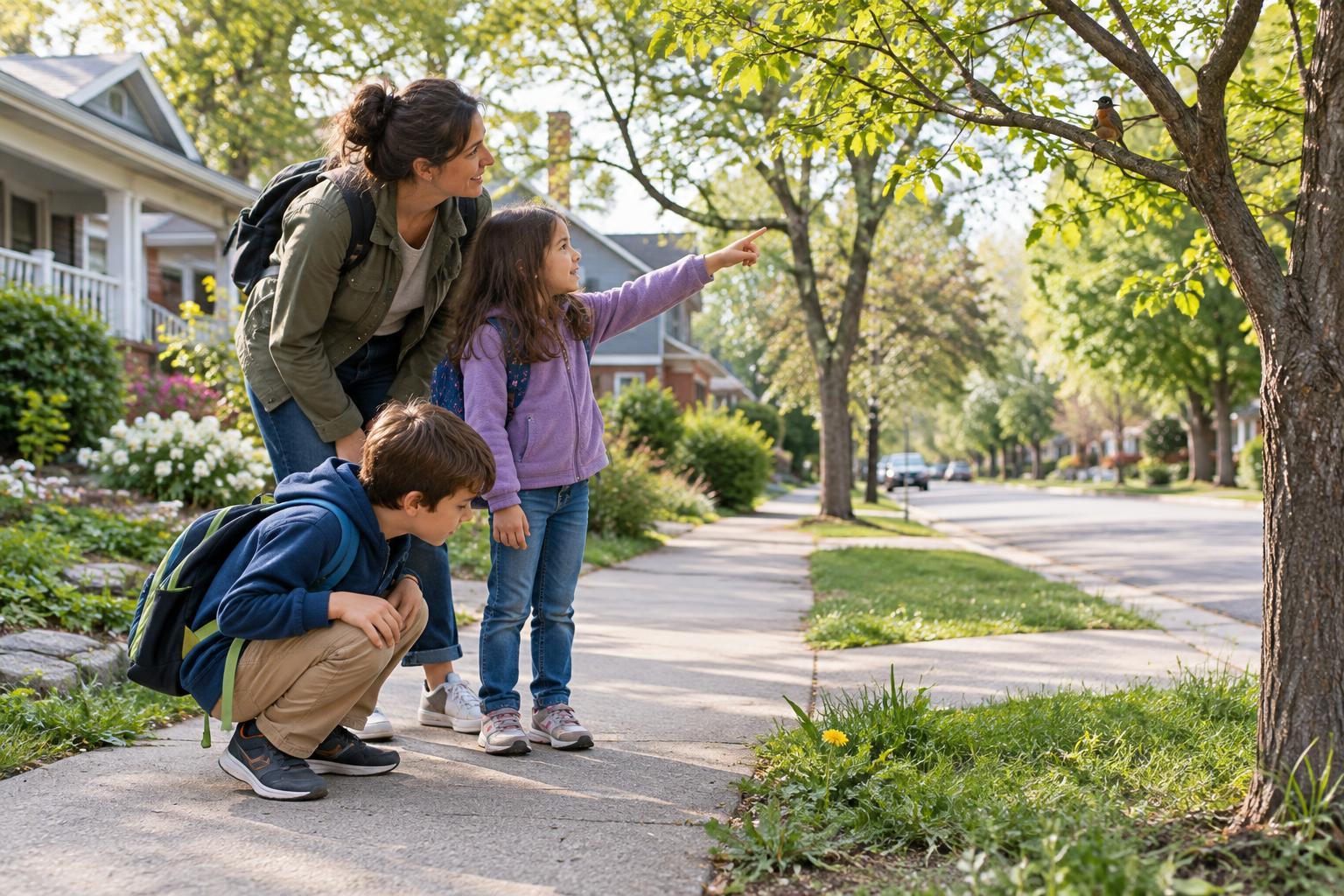
A short route works well when your family wants to compare places. You might notice how trees change from a sunny block to a shaded one, look for different kinds of doors, or listen to how sounds shift between a busy street and a quieter side road. Pick one simple question to carry along. It gives the walk a purpose without requiring anyone to find a particular answer.
Keep the route modest and easy to shorten. A loop that returns near its starting point, or a walk with a clear turnaround landmark, is often simpler than a long one-way trip. Check the path beforehand when possible: look for crossings, uneven ground, shade and places to pause. Children may want to stop at the first interesting crack in the pavement. Leave enough flexibility for that discovery to become part of the plan.
Choose a spot when staying put opens up more
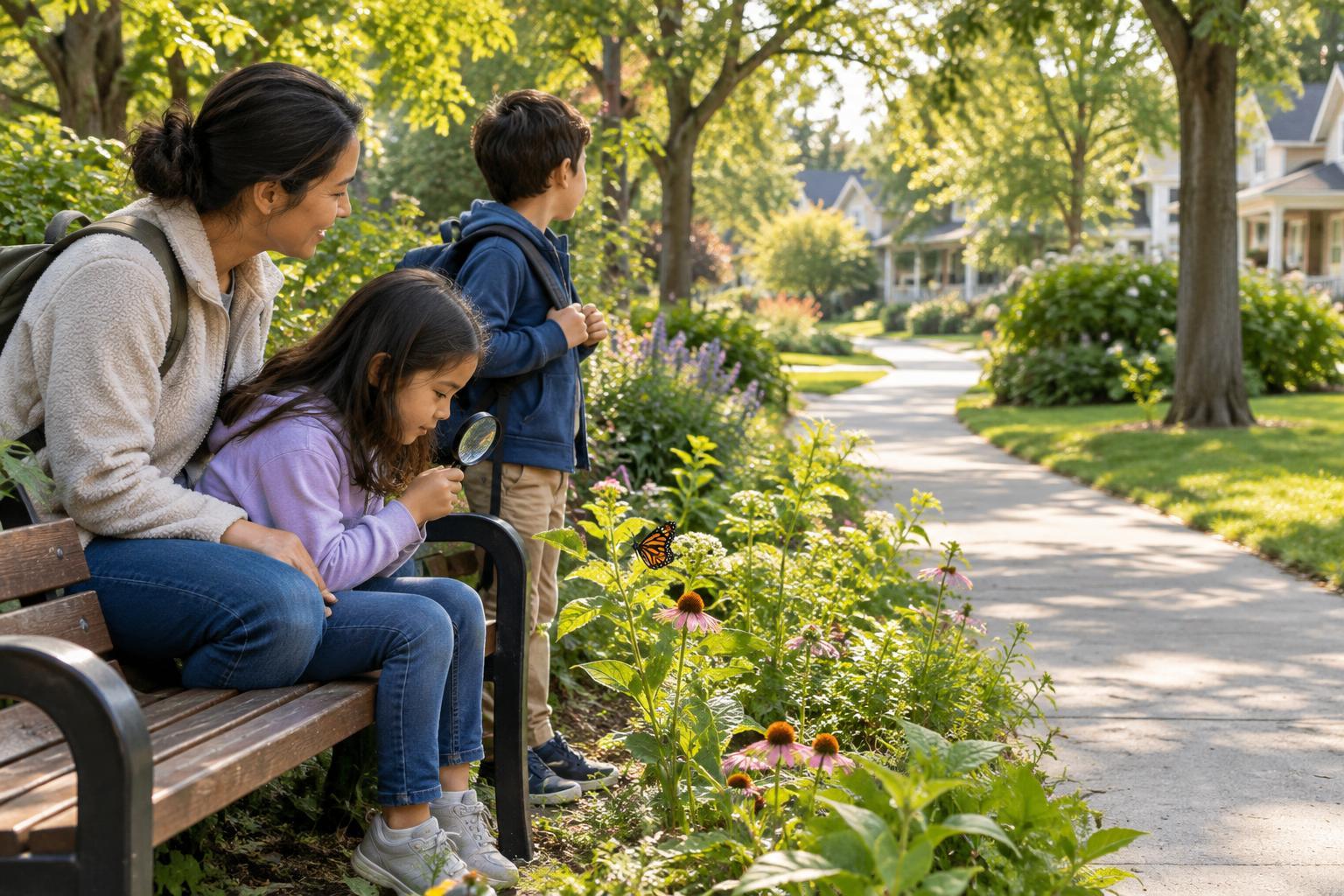
An observation spot can be a bench, a patch of grass where sitting is allowed, or a safe place to stand back from a sidewalk. It is a good choice when time is short, someone needs to limit walking, or the family wants to practice patient noticing. At first, a corner or courtyard may seem quiet. After a few minutes, you may spot shadows moving, leaves stirring, people using a path in different ways, or birds arriving and leaving.
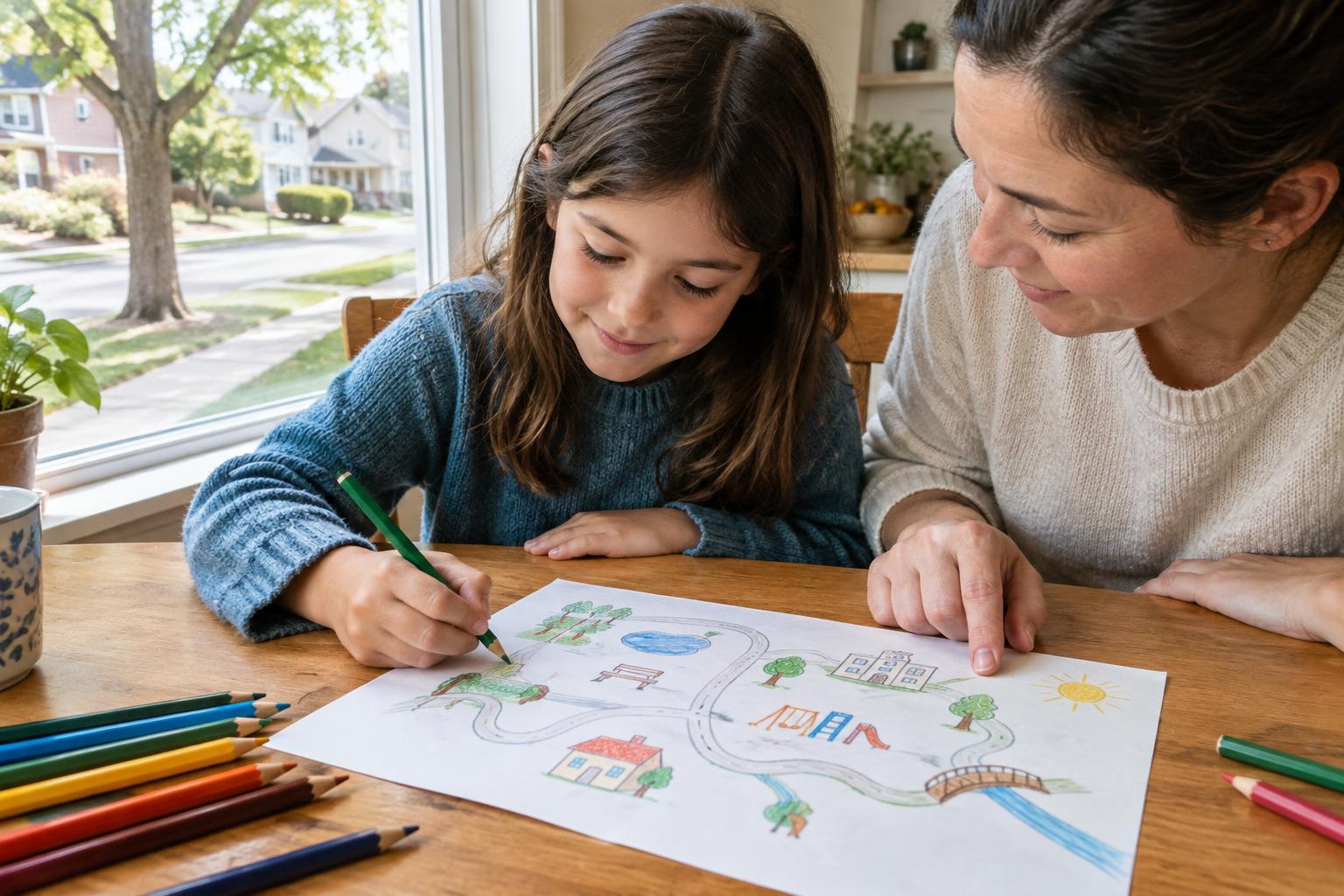
Choose a spot where your family can pause without blocking others. Consider seating, weather, noise and a comfortable way to leave if anyone has had enough. Then try three rounds of looking: notice what is still, what is moving and what changes while you wait. Younger children can point or describe colors; older children might sketch a scene and add one new detail each minute. Nobody needs special equipment or a perfect view.
Let your family’s interests settle the tie
If both options seem possible, ask each person what they hope to do. Someone who wants to search for patterns may enjoy a route with several building fronts or garden edges. Someone who wants to draw, listen or watch a single place change may prefer a spot. Different preferences do not require separate outings: a short walk to an observation spot combines movement with a pause.
You can also give the outing a small, shared mission. On a route, look for three ways people make a street easier to use, such as signs, ramps or places to rest. At a spot, notice who or what uses the space and at what distance you can observe without disturbing them. If your first idea is not working, switch. A route can end with a long pause, and a planned sit can become a brief stroll.
Finish with what you noticed, not how much you covered
Bring only what helps: perhaps water, weather-appropriate clothing and a small notebook. Remind children to stay close at crossings and to look without entering private spaces or touching things that belong to others. If you are observing people, focus on public-space patterns rather than photographing or describing strangers in identifying detail.
On the way home, ask, “What did you notice after we slowed down?” and “What would you like to check next time?” A quick drawing or a few words can preserve the discovery. The next outing might repeat the same spot in different weather or take a route past it. Whether your family traveled several blocks or barely moved, the outing succeeds when it makes a familiar place worth another look.