The story of a place
Local history is the study of what happened in a particular place. That place might be a town, a neighborhood, a street or even one building. Its history includes more than famous people and major events. Shops, homes, schools, parks, transportation and everyday routines can all help tell the story of how a community became what it is.
For families, the best starting point is often a question a child can see for themselves: Why does this road curve? What was this building used for before? Who chose the name of this park? You do not need to know the answer before you begin. Asking, looking and finding out together are part of the experience.
Start with what you can observe
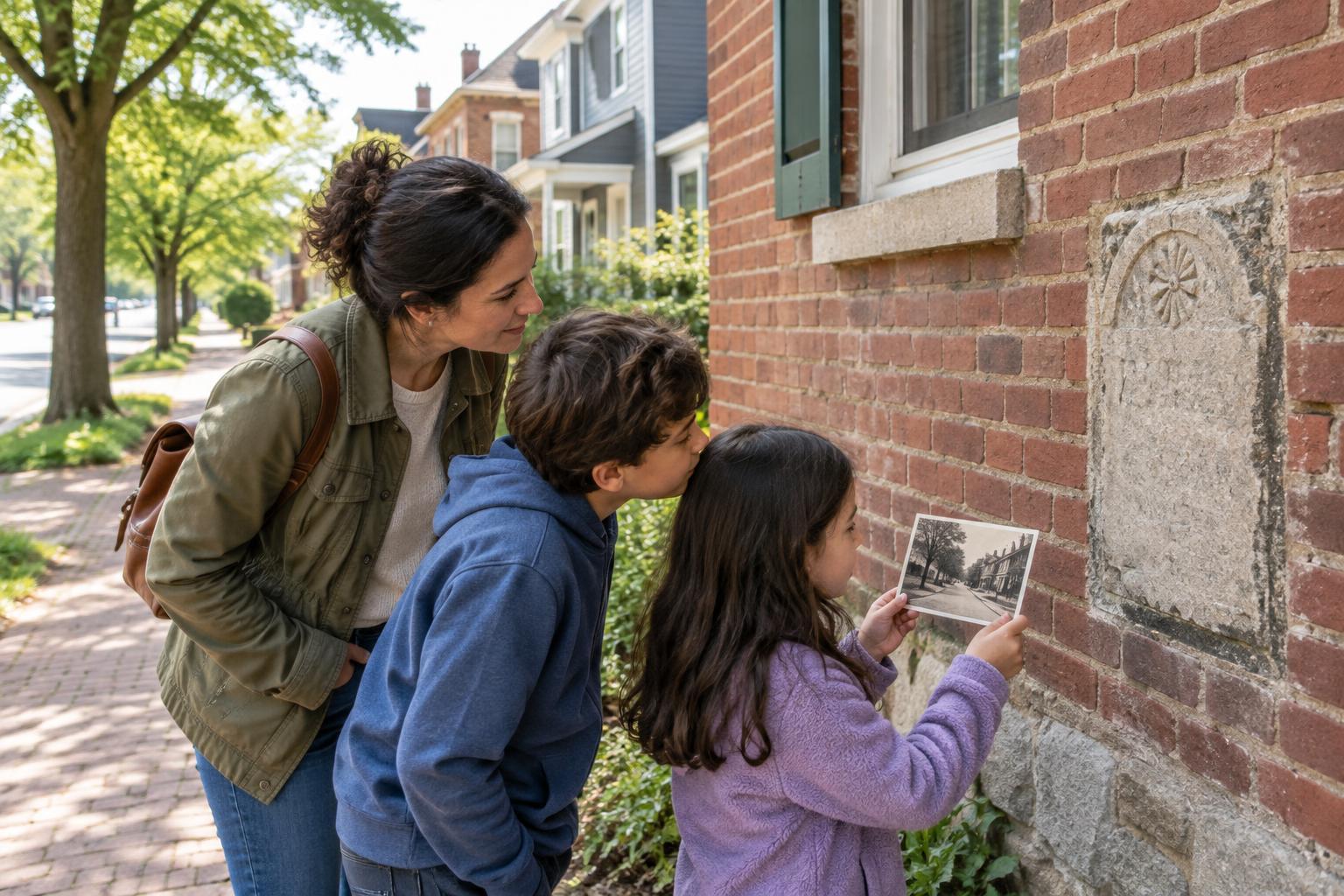
Take a short walk along a familiar route and choose one feature to investigate. Look for dates on buildings, changes in brickwork, old signs, different styles of houses or a path that seems to lead somewhere unexpected. These details are clues, not proof. A date on a building might mark a renovation rather than its original construction, for example.
Give children a simple job: sketch a doorway, count the kinds of signs they see or describe what might have changed on the street. Invite them to separate observations from guesses. “There are two covered windows” is an observation; “This used to be a shop” is an idea to investigate. That distinction makes the walk feel like a mystery without turning every guess into a fact.
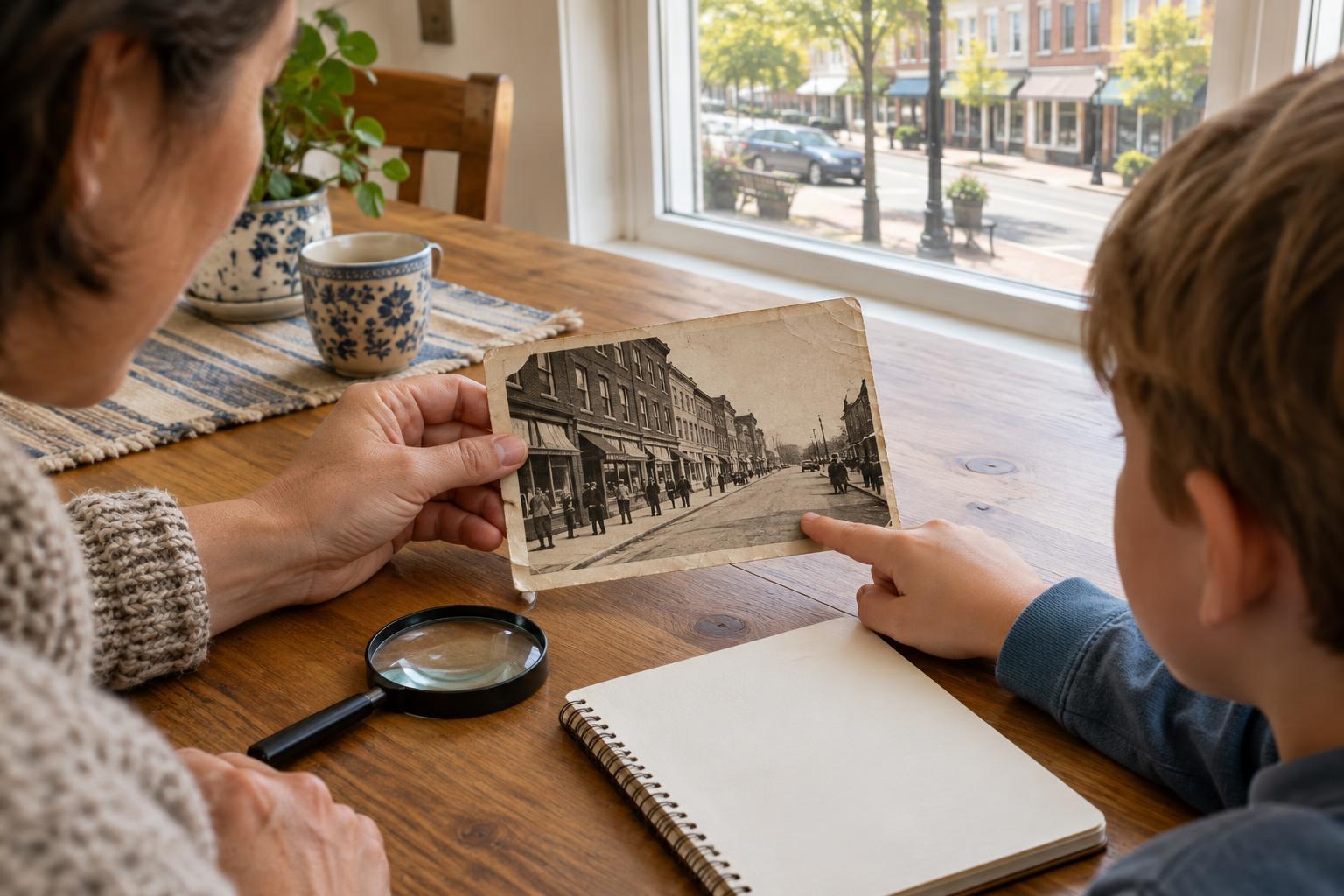
A walk is not required. Families can examine a photograph of a public place, notice the design of a household object or ask what an older relative remembers about a familiar street. Start with what is available and interesting to your child.
Look for more than one kind of evidence
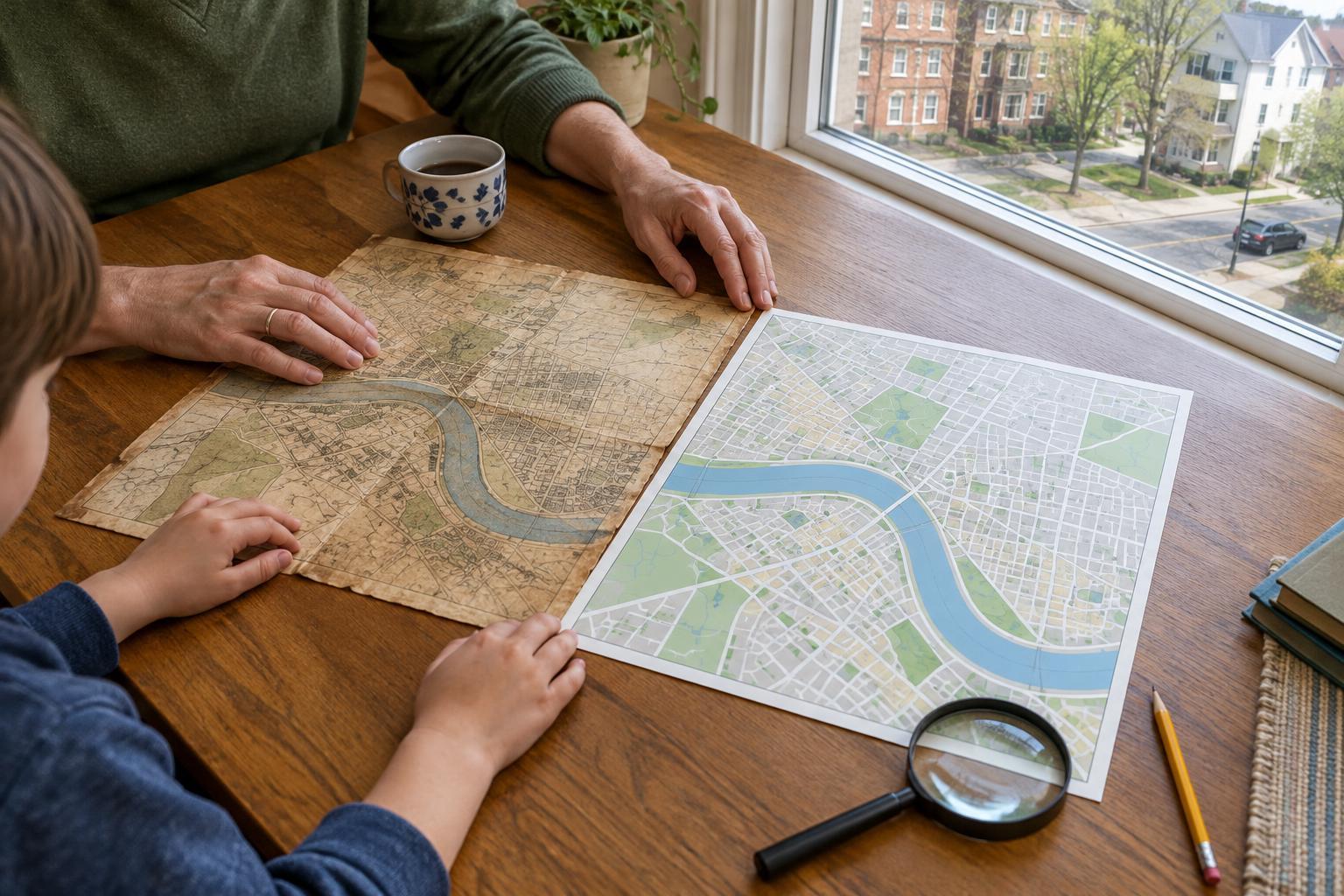
Once you have a question, try comparing different kinds of sources. A local library or archive may have maps, newspapers, photographs or directories. Museums and historical groups may provide exhibits or collections about the area. Signs and plaques can be useful starting points, but they usually tell only a short version of a story. Check whether a source says when an image or document was made and who created it.
Personal memories offer another view. A neighbor might recall what a street felt like years ago, while an old map shows where buildings stood. Neither source answers every question. Memories can differ, and maps may leave out people’s daily lives. If two sources disagree, families can ask why instead of rushing to pick a winner.
Help children notice whose experiences are represented. A photograph of a busy street may not reveal who lived nearby, who worked there or who was excluded from certain spaces. Look for opportunities to learn about the many communities connected to a place, including Indigenous peoples and later residents, without assuming that any one source speaks for everyone.
Make it a family investigation
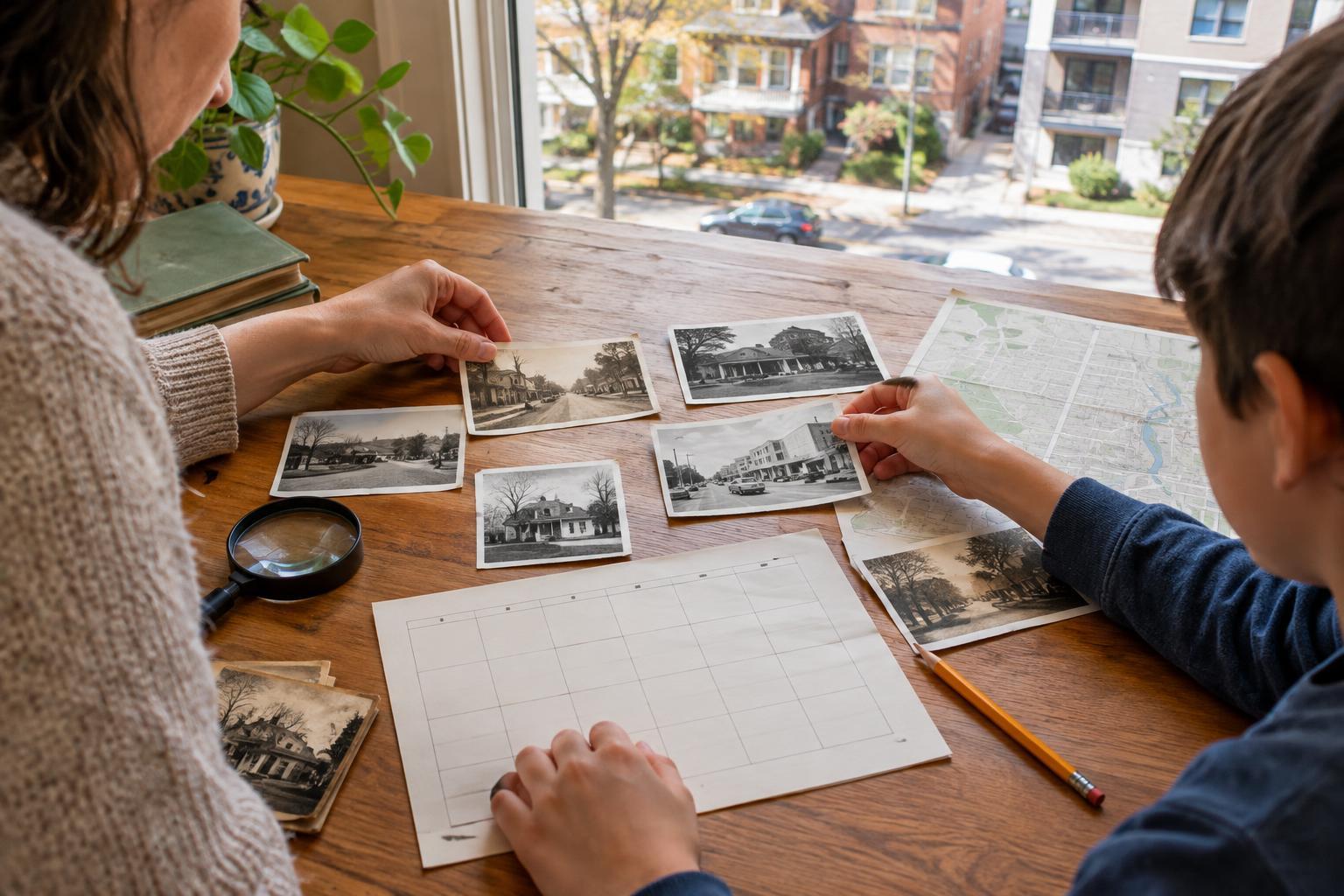
Keep the project small enough to finish in an afternoon or revisit over several weeks. Choose one question, then make a two-column page labeled “What we know” and “What we wonder.” Add a drawing of the place or object you are studying. As you find information, note where each detail came from so you can check it again later.
Children can make a simple then-and-now comparison using two images of the same public view, or draw their own picture of the view today. Ask what stayed the same, what changed and what cannot be determined from the images alone. Younger children may enjoy spotting shapes and materials; older children can think about how transportation, work or land use might have influenced a change.
If you speak with someone about their memories, ask permission before recording or sharing their words. Explore public spaces respectfully, follow posted rules and avoid treating private property as an invitation to investigate. A good history activity builds curiosity about neighbors, not just buildings.
Leave room for questions
Local history rarely produces a single neat story. A building can have many uses, and the same event can matter differently to different people. When evidence is missing, it is fine to say, “We do not know yet.” You can keep a list of unanswered questions for a future library visit, walk or conversation.
The goal is not to turn every outing into a lesson. It is to help children see that familiar places have layers of human experience behind them. By observing carefully, checking clues and listening to more than one perspective, a family can begin to understand its community while finding new things to wonder about.