What makes play open-ended?
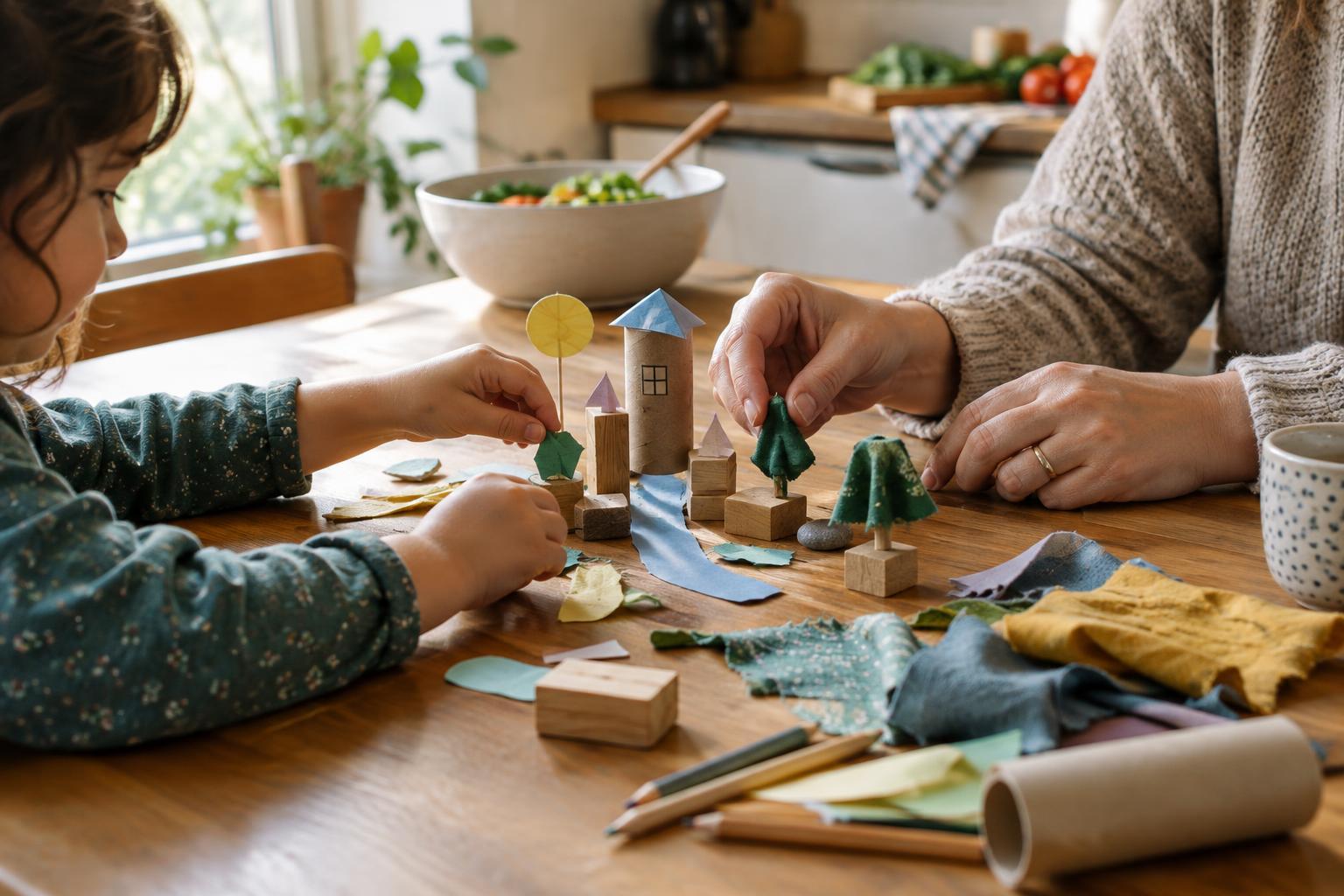
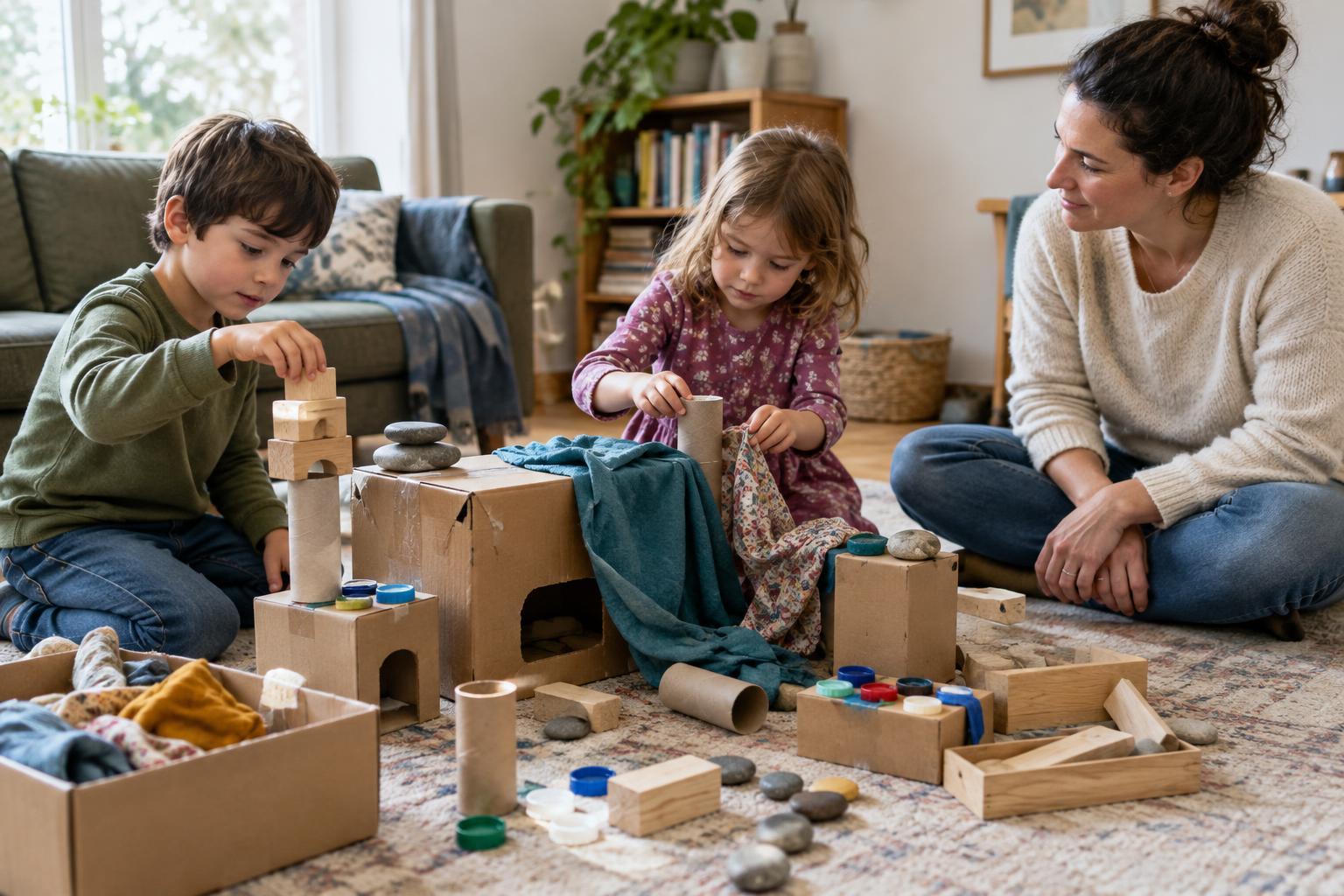
Open-ended play is play without a single correct result. A cardboard box might become a shop, a spaceship or a quiet place to read. A handful of fabric scraps might turn into costumes, a landscape or blankets for toy animals. The child can choose a direction, change it and decide when the play feels finished.
This does not mean adults have no role, or that every activity must be completely unstructured. You might choose the materials, clear a space or suggest a starting point. The difference is that you are not asking the child to copy a model or produce a particular finished object. If the plan changes halfway through, that is still play working as intended.
A useful comparison is a craft kit with a picture of the expected result. Making that craft can be enjoyable, but its goal is fairly clear. With open-ended materials, the question is less “Does it look right?” and more “What could this become?” Families can make room for both kinds of activity.
Start with what you already have
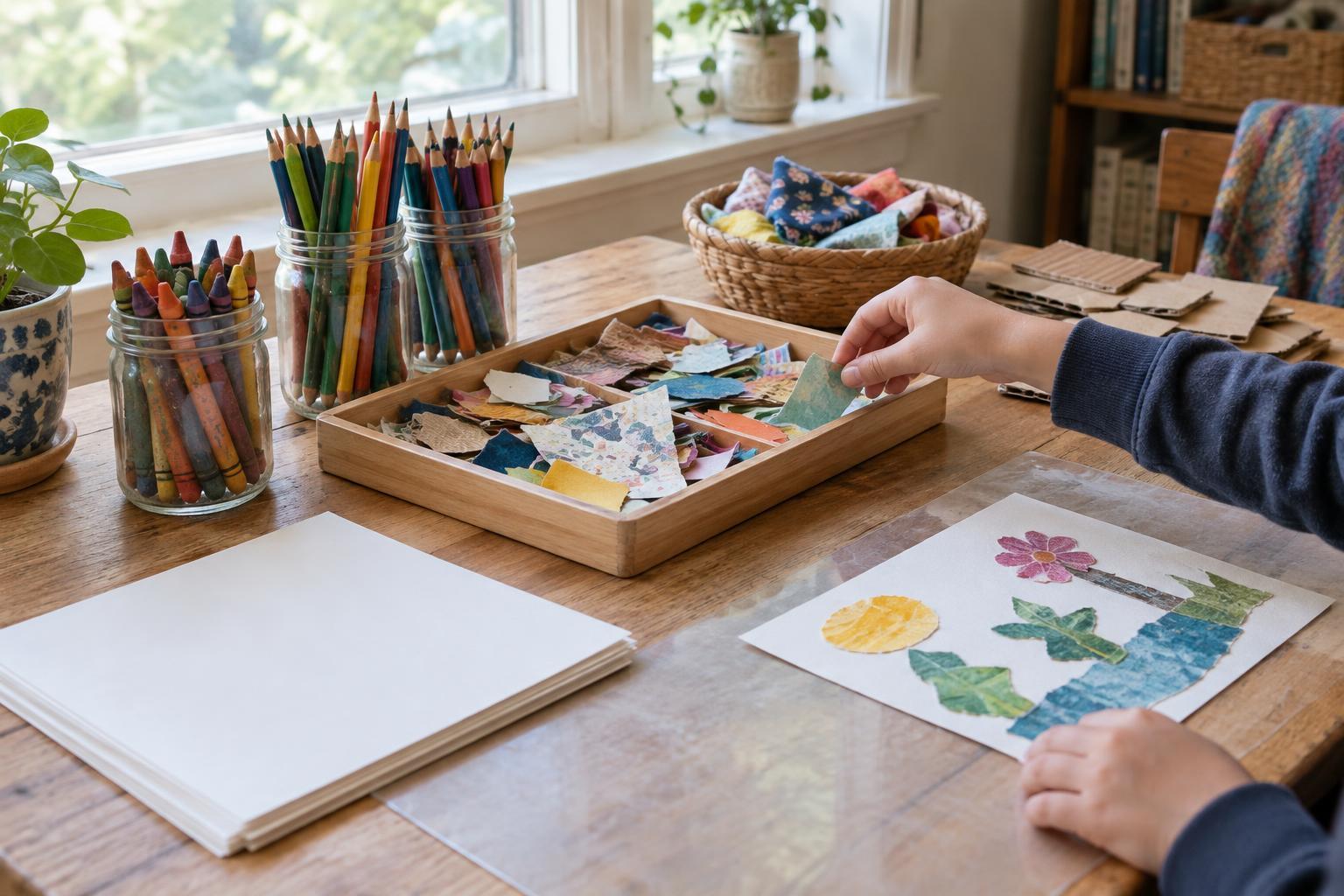
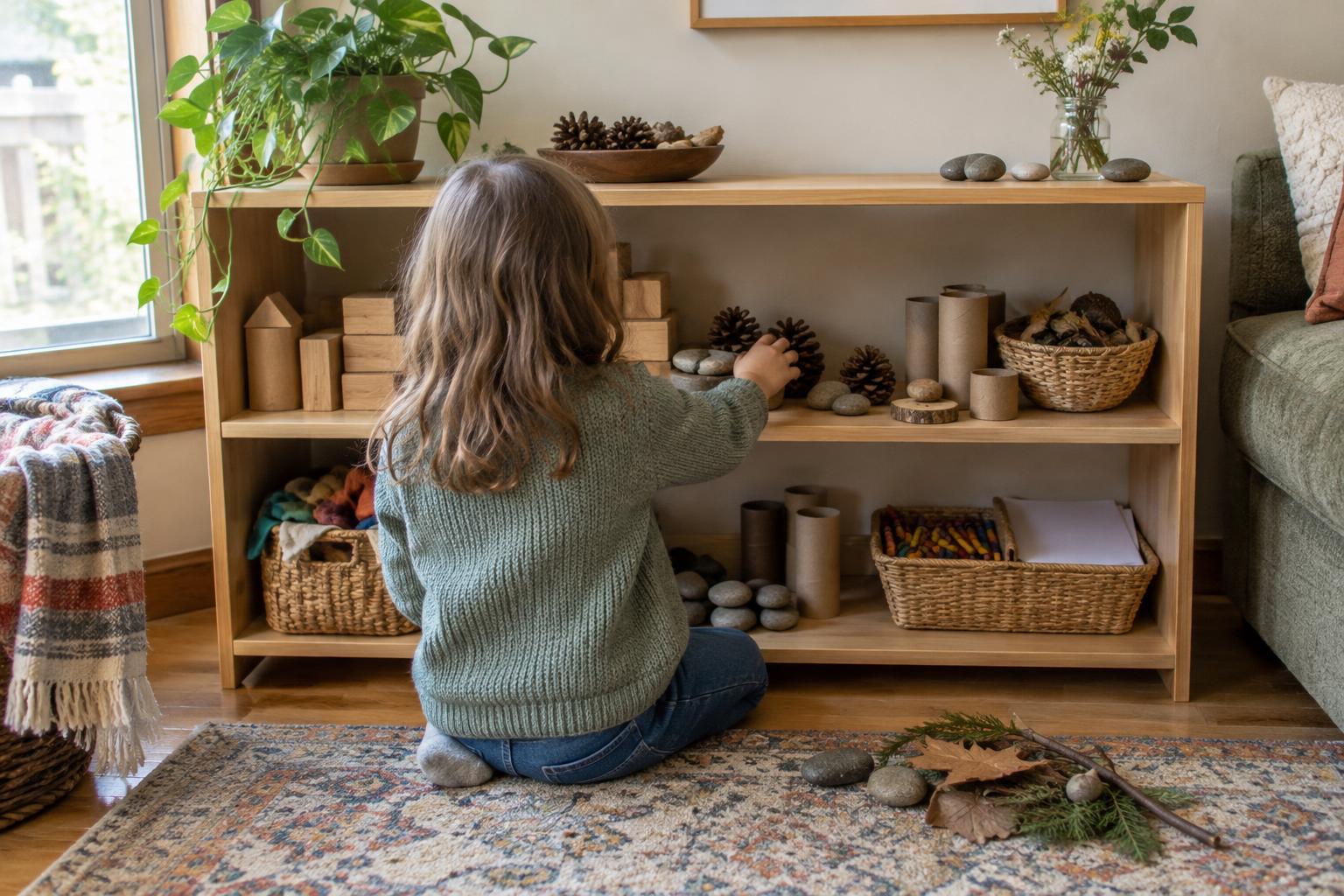
You do not need a special set of toys. Try offering a small collection of safe, familiar items: cardboard tubes, paper, washable crayons, large fabric pieces, blocks or clean containers. Put out enough to invite choices without covering the whole room. A tray, tablecloth or designated corner can give the play a visible boundary and make cleanup easier.
If a blank slate feels overwhelming, add a gentle invitation rather than a set of steps. You could ask, “What could we build for these toy animals?” or “What could this box be today?” Then leave space for the child’s answer, including an answer you did not expect. On another day, simply setting out materials and waiting to see what catches their interest may be enough.
Choose materials with the people and space in mind. Small objects may be unsuitable when younger children are nearby, and anything sharp, fragile or difficult to clean can stay out of the play area. A few well-chosen objects are often easier to explore than a large pile.
Join in without taking over
Adults can be play partners without becoming directors. Watch for a moment before offering ideas. If a child is lining up blocks, you might say, “I see you’re making a long row,” rather than asking them to build a tower. Describing what you notice shows interest while leaving the next move to them.
When invited into pretend play, ask what role they have in mind for you. You can follow their story, contribute a small idea or ask a question such as, “What happens next?” If they reject your suggestion, it is fine to let it go. The goal is not to be endlessly entertaining; it is to give the child room to make decisions.
It is also fine to set limits. You might say that paint stays on the paper or that cushions can be moved only from one part of the room. Clear boundaries can protect the space while still leaving many possibilities inside it.
Make room for different ages and interests
Open-ended play can look quiet or energetic, elaborate or brief. One child may spend time arranging objects by color. Another may turn the same objects into characters in a story. Neither approach needs correcting. If children of different ages are playing together, offer materials everyone can use safely and let them take on different roles rather than expecting identical projects.
Interests can provide easy starting points. A child who likes vehicles might enjoy making roads from paper strips. One who likes stories might invent a character from a sock or a paper bag. A walk around the neighborhood can also spark play later: after noticing doorways, signs or interesting building shapes, children might make their own street from boxes and drawings. The observation is an invitation, not a test of how accurately they can recreate what they saw.
If a child says they do not know what to do, offer two small options and let them choose. You could begin building beside them, without asking them to copy you. Some children need time to handle the materials before an idea appears.
Let the process be enough
Open-ended play does not always produce something to display. A structure may be built and knocked down; a story may stop mid-scene. You can appreciate the choices a child made without asking for a polished result: “You found a way to balance those pieces,” or “Your idea changed as you played.”
When it is time to stop, give a little warning if you can. Ask whether the child wants to save a creation, take a picture of it or take it apart and reuse the pieces. A simple place to store favorite materials makes it easier to return to an idea another day.
The easiest way to begin is small: choose a few safe materials, make a little space and see what happens. Open-ended play is not another task for families to get right. It is an opportunity to be curious together and let an ordinary object become something unexpected.