Start with a crossing you already use
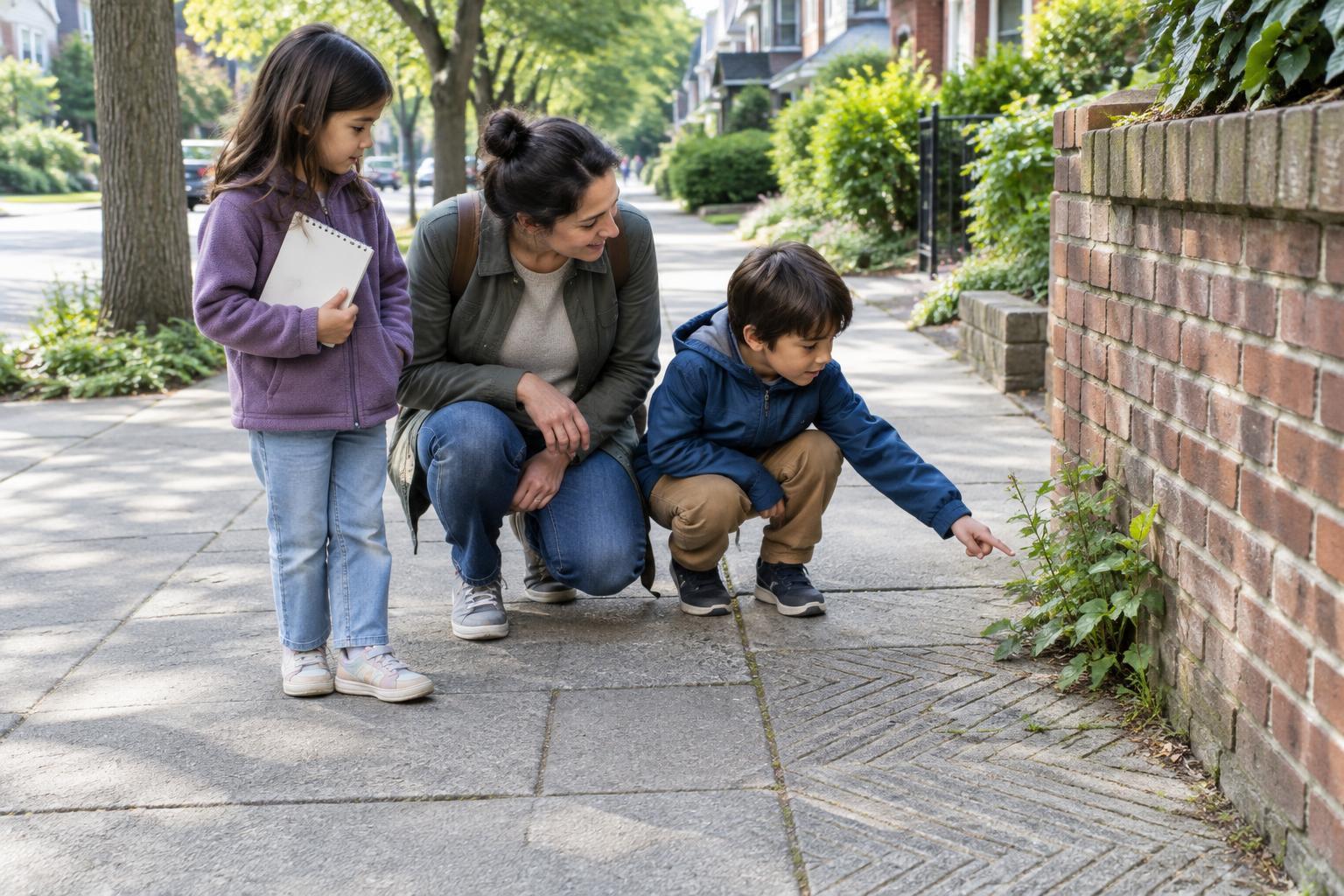
A street crossing is more than the painted lines on the road. For a family on foot, the experience begins while approaching the corner and ends only after everyone has reached the other side. Along the way, people need somewhere to wait, a clear view of traffic and enough time to move at a comfortable pace. Noticing these details can turn a familiar walk into a neighborhood discovery activity.
Choose a route your family would normally take, such as a walk to a library, park or shop. An adult should lead the activity and make crossing decisions. You can do most of the observing from a sidewalk or another appropriate place away from the roadway; there is no need to try an unfamiliar crossing to evaluate it. Follow traffic signals and local rules, and leave the note-taking until you are safely stopped.
Notice the approach and the place to wait
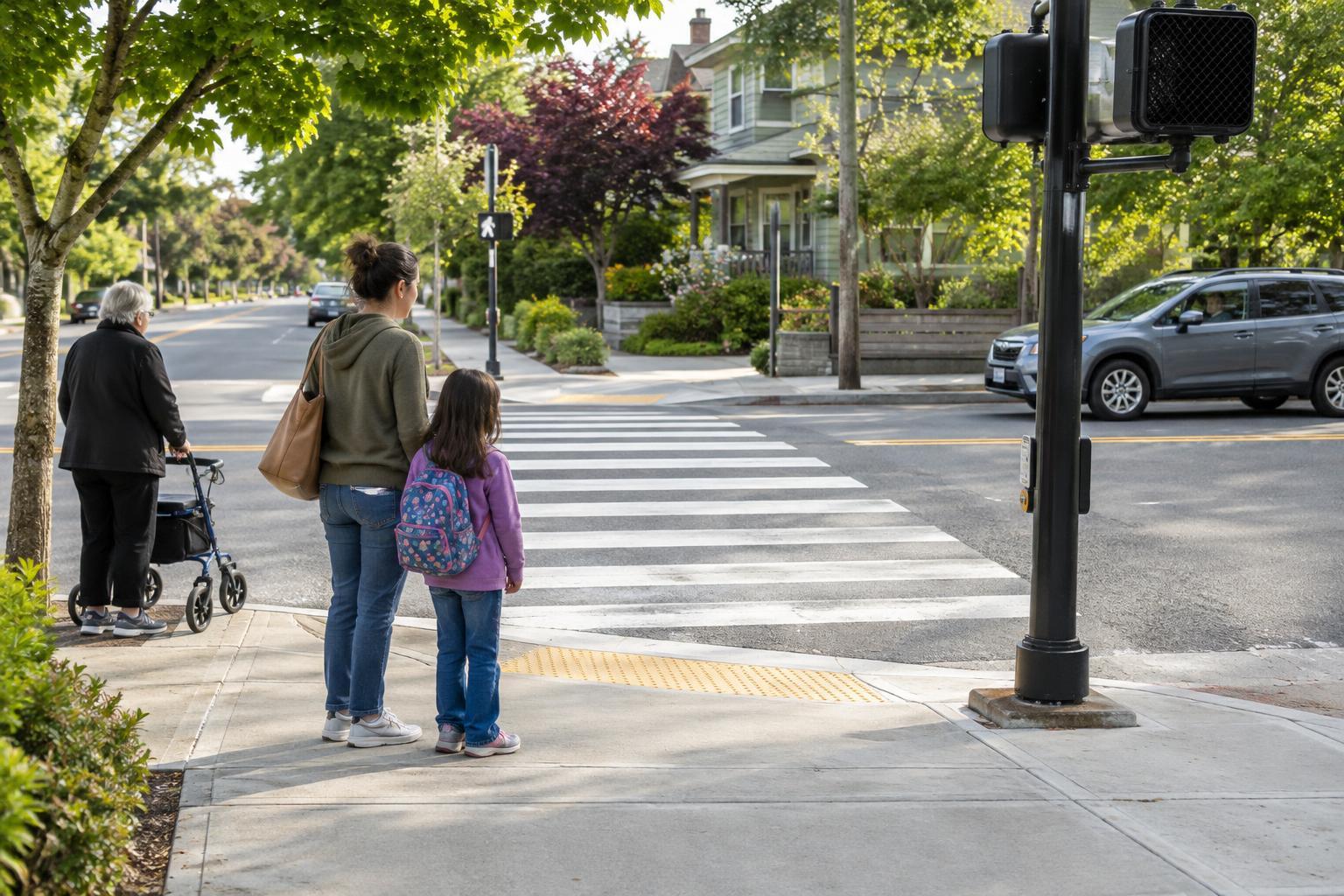
As you approach a corner, ask what helps you recognize where to cross. A visible crossing, an easy-to-find signal or a path that continues naturally from the sidewalk may make the route easier to understand. Notice whether signs, parked vehicles, plants or other objects affect what walkers and drivers can see. Visibility can change during the day, so describe what you observe rather than deciding that a crossing is always one way or another.
Next, look at the waiting area. Is there room for your group to stand without blocking other walkers? Does the sidewalk feel easy to navigate with a stroller, mobility aid or small child holding an adult’s hand? A curb ramp may help someone move between the sidewalk and crossing, but its usefulness can depend on details such as its position and whether the path is clear. Invite children to name what they notice without asking them to stand close to the curb for a better look.
Think about time and movement
From a safe waiting place, observe how the crossing works. If it has a pedestrian signal, can your family tell when to wait and when to cross? Where a button is provided, is it easy for an adult to reach? Notice whether turning vehicles, bicycles or other walkers share parts of the route. These observations are not a substitute for checking traffic each time; even at a familiar crossing, an adult needs to pay attention before and during the crossing.
Comfort also depends on how much someone feels they must hurry. People walk at different speeds, and a family may need extra time to stay together. Instead of trying to measure a signal while crossing, talk afterward about whether the crossing felt rushed or unhurried. If you did not cross, you can still observe from the sidewalk and discuss what you could and could not tell from there.
Compare experiences, not just corners
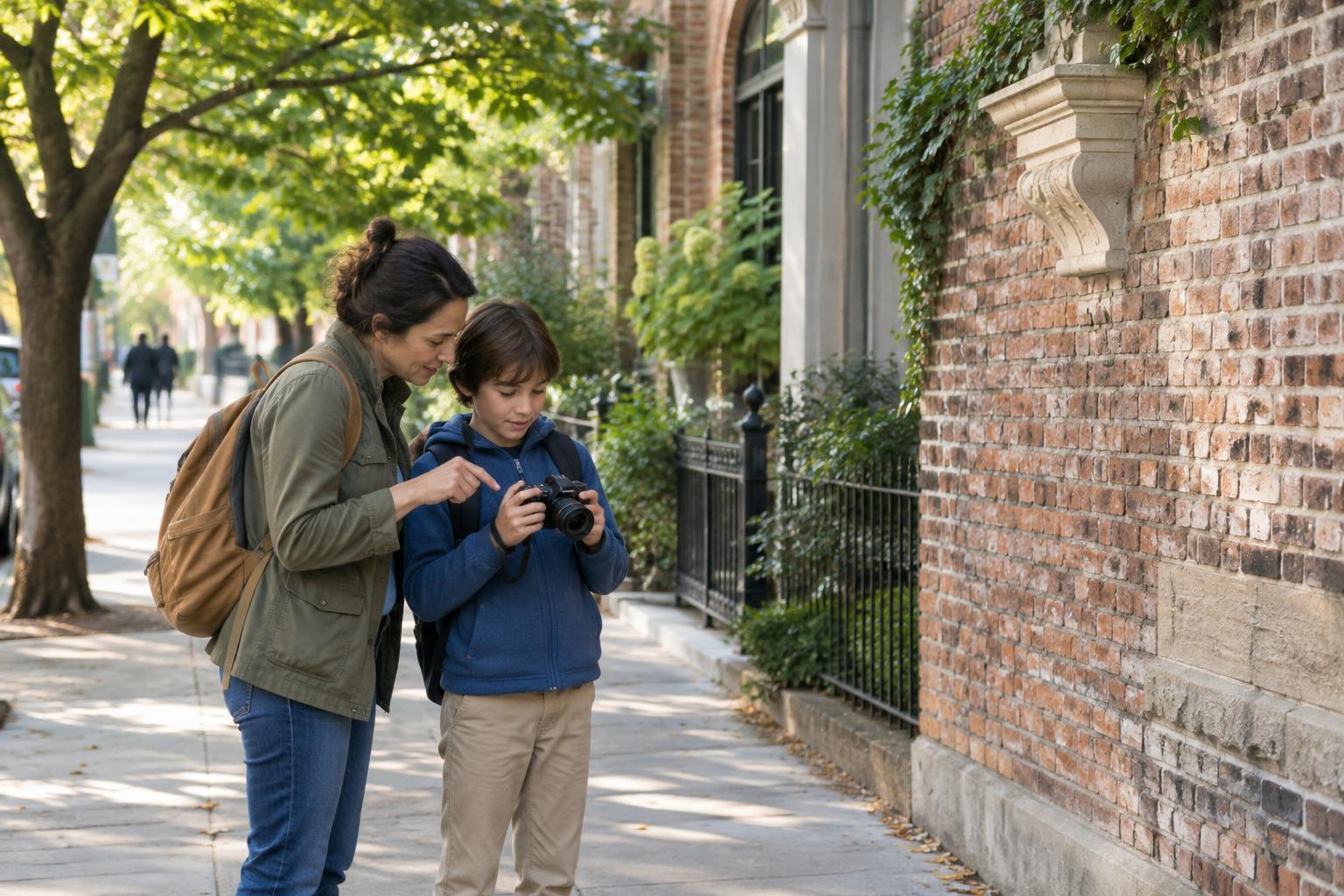
After the walk, draw two simple crossing maps from memory. Mark where your family waited, where you could see traffic and anything that made the route confusing. Children can add symbols: an eye for a clear view, a question mark for something puzzling or a speech bubble for a moment when the family talked about what to do. The aim is to record observations, not to give a crossing a pass-or-fail score.
Ask each person which part felt easiest and which required the most attention. A tall adult, a child and someone pushing a stroller may notice different things. You can also wonder how rain, darkness or a crowded sidewalk might change the experience without assuming you know. This helps children see that a neighborhood is shared by people with different needs.
Use your observations to plan the next walk
When choosing a future walking route, consider the whole journey rather than a single crossing. A slightly longer route may feel more comfortable if it offers clearer places to wait or fewer confusing decisions. Talk through the route together before setting out, while keeping the adult responsible for judging conditions as they are.
If you notice a concern you want to share, write down the location and a plain description of what you observed, such as a blocked sightline or a hard-to-reach button. A local public works or transportation office may have a way to receive comments. Even if you never submit one, the activity gives children a useful habit: looking closely at everyday places and considering how they work for other people.