Start by letting go of the planned route
You read the exhibit description, thought your child would love it, and made your way across the museum. They glance at it and ask to leave. It can be disappointing, especially if you have limited time for the visit. But a child’s lack of interest in one exhibit does not mean the trip has failed. They may be tired, hungry, overwhelmed, or simply drawn to something else.
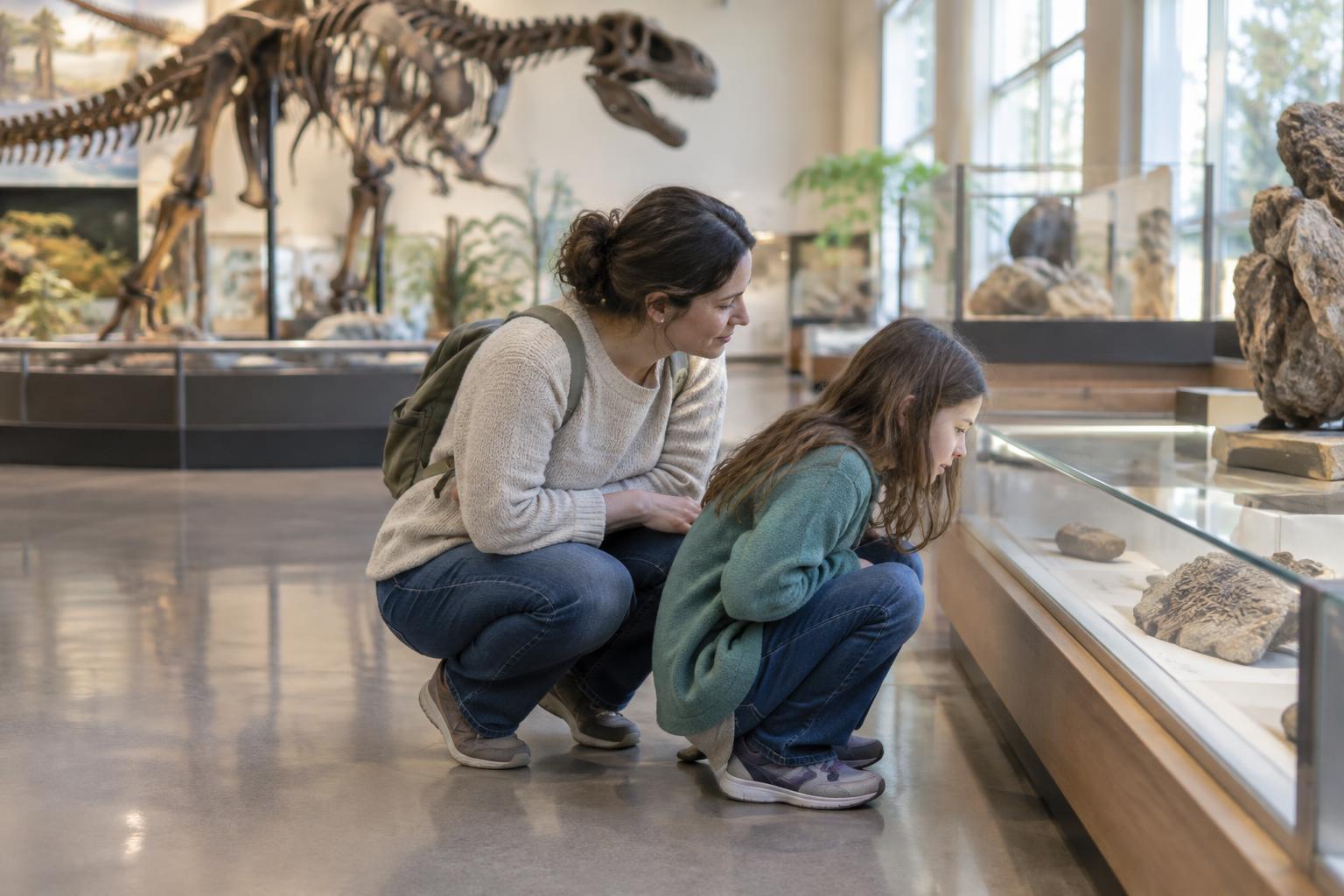
Before trying to persuade them to stay, take a moment to observe. Are they looking at a nearby display? Do they want to move their body after standing still? Are the sounds or crowds making it hard to focus? Their response can tell you more about what they need than the exhibit label can. A flexible plan leaves room for that information.
Offer one small invitation, not a sales pitch
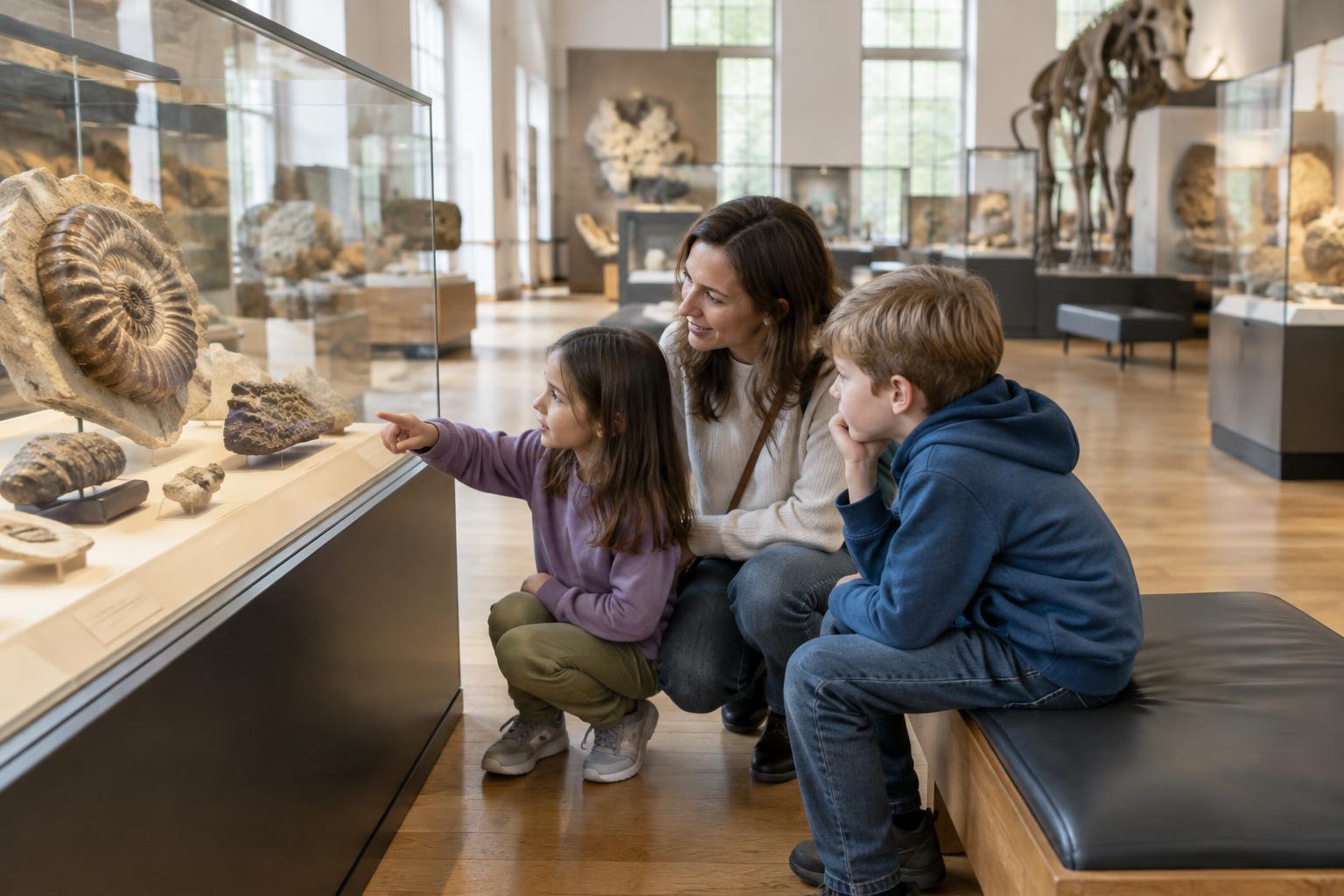
If your child seems comfortable but unengaged, try a brief prompt connected to something they can see or do. You might ask, “Which of these objects would you choose to carry home?” or “Can you spot something smaller than your hand?” At an exhibit with moving parts, you could ask what they think will happen before pressing a button. A simple choice or prediction is often easier to enter than a long explanation.
Give the invitation a little time, then accept the answer. If your child shrugs or walks on, you do not need to keep finding new reasons the exhibit is fascinating. Children notice when an activity has become an obligation. One genuine question followed by permission to move on can keep the visit pleasant for everyone.
Follow their attention, even when it surprises you
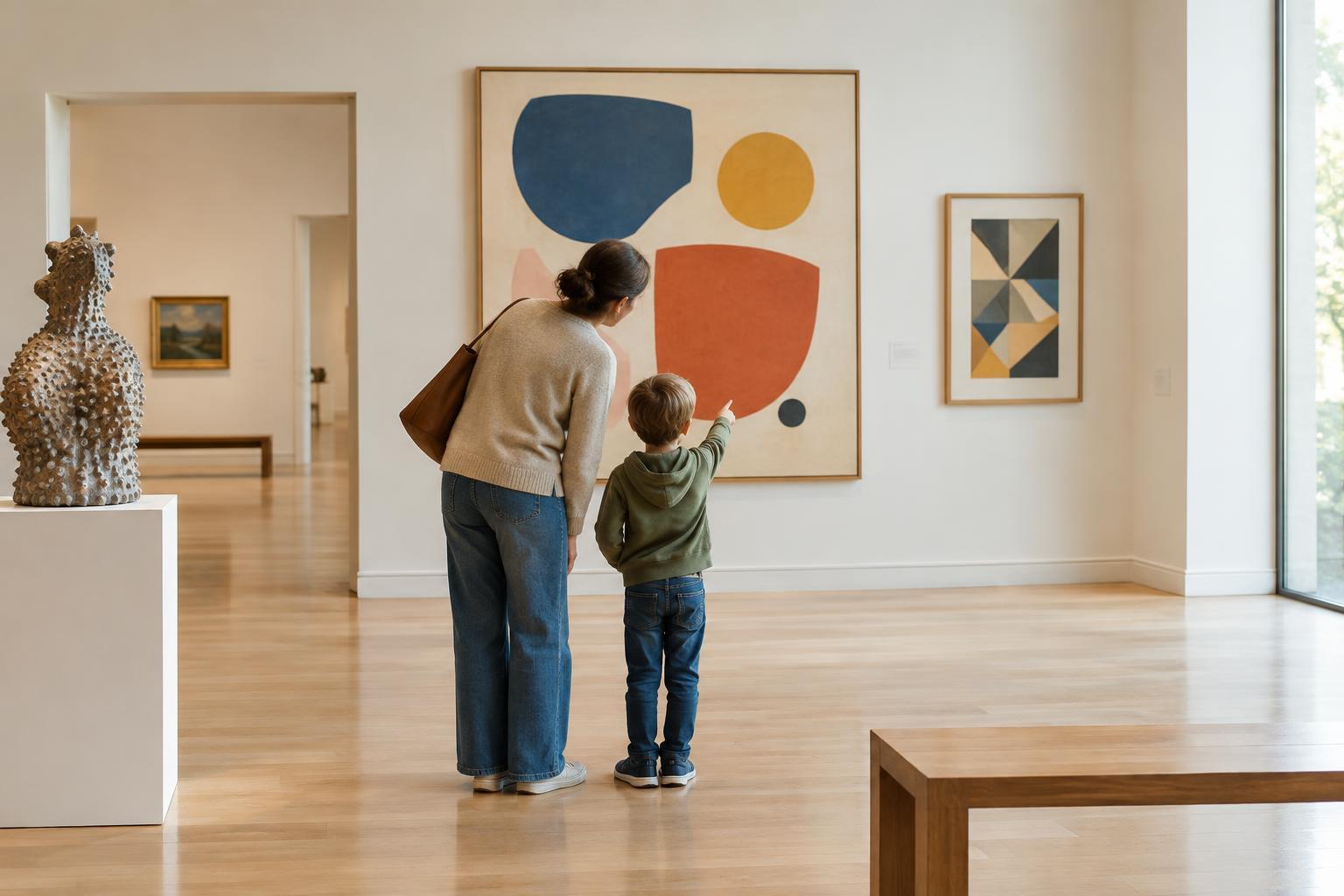
Children do not always value the same parts of a museum that adults do. The pattern on a floor, a window overlooking the street, or the way a display case is built may hold their attention longer than the featured exhibit. Those interests can still lead to observation and conversation. You might wonder together how a large object got into the building or look for shapes that repeat in different rooms.
This does not mean letting a child touch restricted objects or wander away from you. Follow posted rules and stay aware of other visitors. Within those boundaries, let your child choose between two nearby places to explore. A choice gives them some ownership of the visit without requiring you to abandon every practical limit.
Make space for a break
Museums can ask a lot of a child: reading signs, waiting turns, using quiet voices, and taking in unfamiliar sights and sounds. If interest drops suddenly across several exhibits, a break may help more than another activity. Look for a permitted place to sit, have a drink or snack where allowed, or step outside before deciding what to do next.
You can keep the conversation light. Instead of asking whether they liked everything, try “What have you noticed so far?” They might mention something you barely saw. They might also say they are ready to go. If leaving is possible, ending the visit before everyone is exhausted may make it easier to approach another museum day with curiosity.
Carry the curiosity beyond the exhibit
An exhibit can become meaningful later, even if your child spent only a minute with it. On the way home, they may ask about an object they passed or imitate a demonstration they watched from a distance. You can answer what you know, wonder aloud about what you do not, or make a note to investigate together. There is no need to turn the ride home into a quiz.
For a future visit, consider choosing one or two possible stops rather than planning to see everything. Tell your child that skipping a room is allowed and that you can each name something you hope to notice. The goal is not to make every exhibit a favorite. It is to give your family time and space to find something worth wondering about.