Start by making room for the feeling
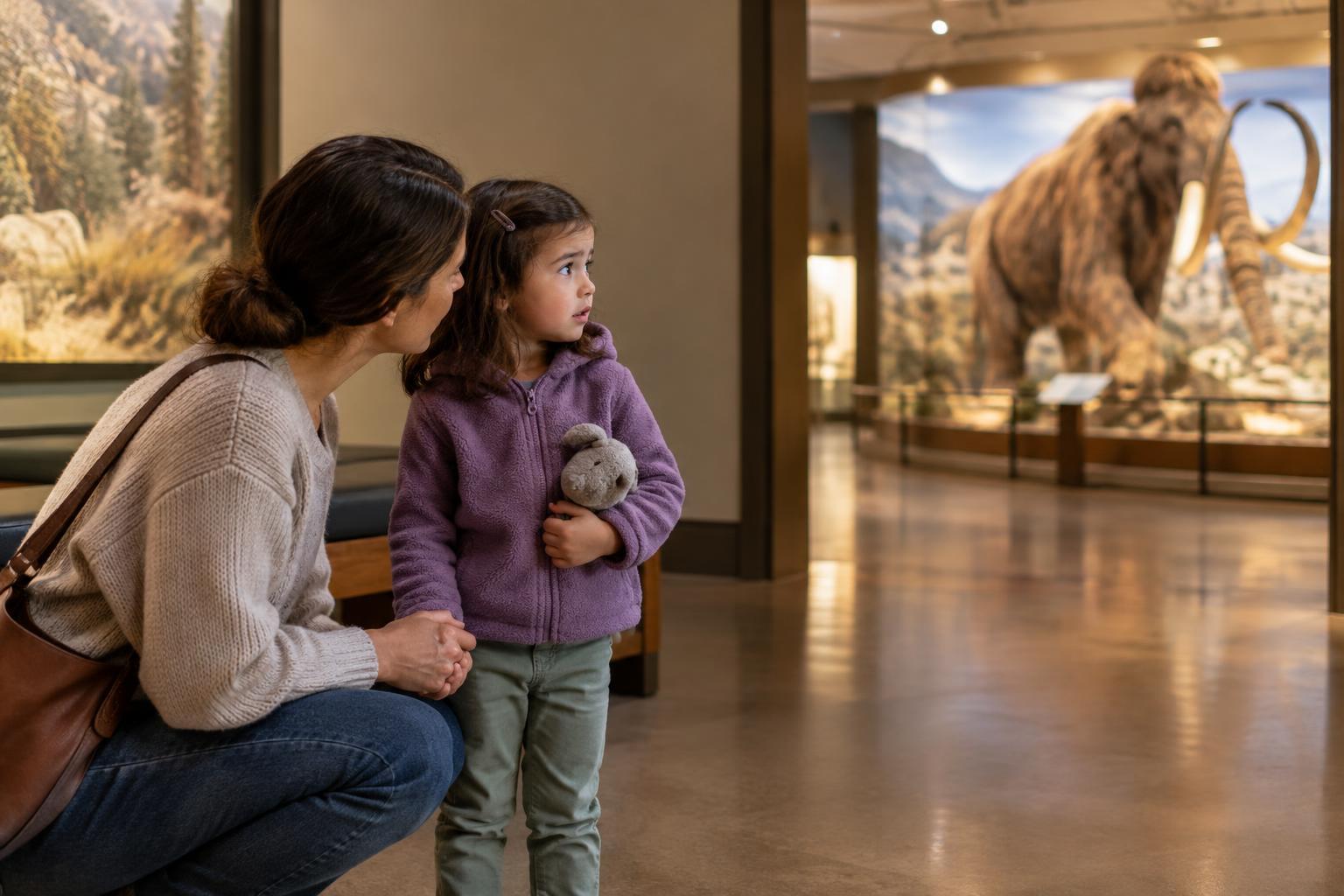
A museum can surprise a child in ways an adult might not expect. A large skeleton may seem enormous from a child’s height. A recorded voice may start suddenly. A painting or historical story may raise questions that feel too big for the moment. If a child becomes frightened or upset, the first task is not to explain the exhibit. It is to help them feel that you have noticed.
Move beside the child, speak calmly and use simple words: “That startled you,” or “You didn’t like seeing that.” You do not need to agree that an object is dangerous to take the feeling seriously. Avoid laughing off the reaction or promising that there is “nothing to be scared of.” What looks harmless to you may still feel intense to someone encountering it for the first time.
If the child wants distance, step away together. A hallway, bench or quieter gallery can make it easier to settle. You can offer a hand or a hug, but let the child choose whether they want one. Taking a break is a useful response, not a failure to appreciate the museum.
Find out what felt upsetting, without an interrogation
Once the child seems ready to talk, ask one open, gentle question: “What part bothered you?” Then give them time. The answer may be different from what you assumed. A child might be worried that an animal model is alive, confused by a dark room or sad about what happened to people in a historical account. Some children will not want to explain at all, especially while they are still unsettled.
Respond to the concern they actually name. If they wonder whether a display can move, you can describe what you know about that display in plain language. If the subject is loss, conflict or harm, a brief, honest explanation is often more helpful than a long lecture. You can also say, “I’m not sure; we can look for an explanation later.” There is no need to turn a difficult moment into an immediate lesson.
Watch the child’s cues as well as their words. A child who changes the subject, looks away or asks to leave may be telling you that they have had enough for now. Curiosity can return later; it does not have to appear on command.
Offer choices that restore a sense of control
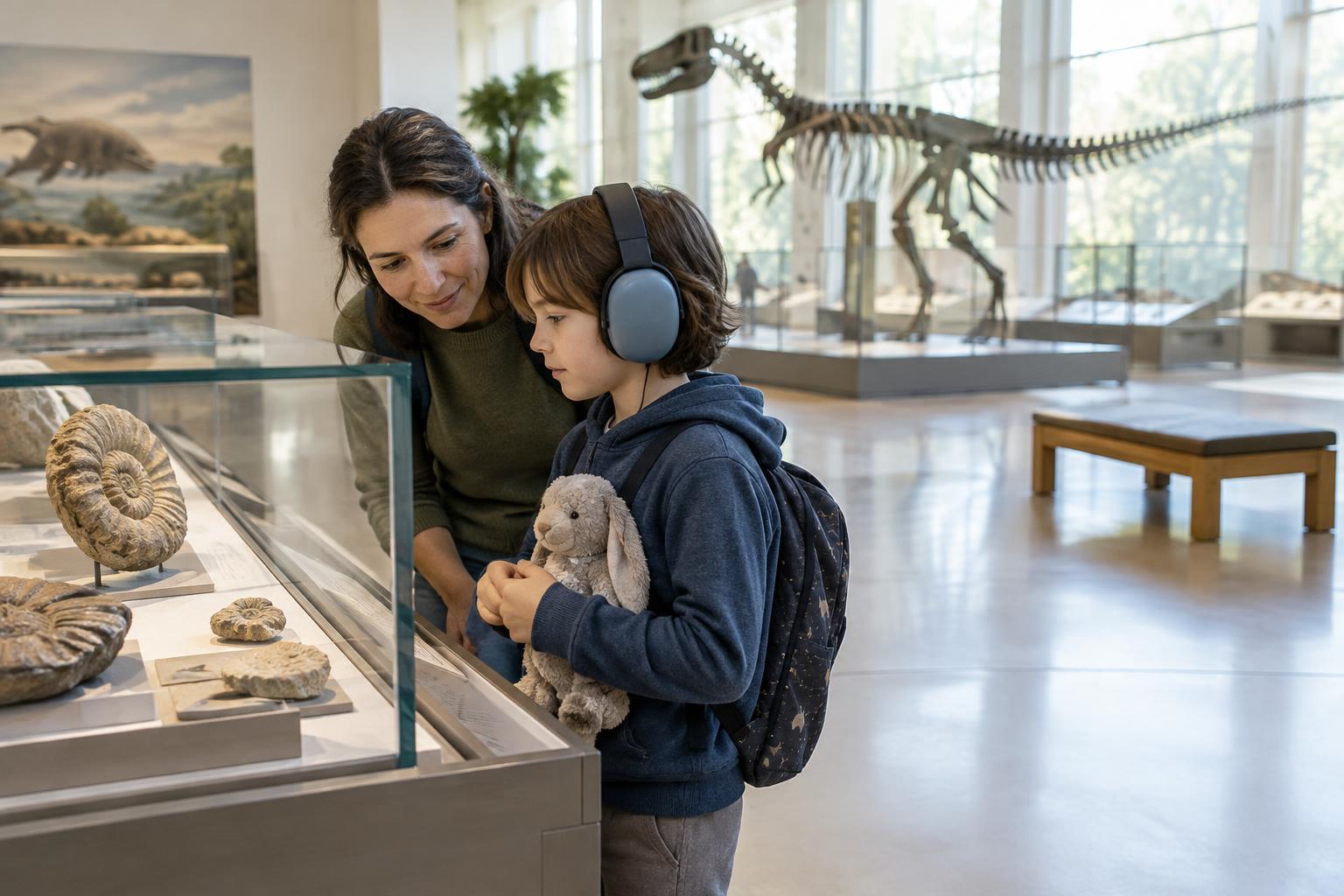
Museums ask visitors to move through unfamiliar spaces and encounter things they did not choose. Small decisions can help a child feel steadier. You might ask, “Would you rather sit here, go to the next room or head outside for a bit?” If staying is possible, offer a choice between looking from farther away and skipping the exhibit entirely.
Do not require a second look to prove that everything is fine. Some children will want to peek again after a break; others will not. Both responses are reasonable. If a gallery has strong sounds, low light or challenging subject matter, check signs or ask staff what lies ahead before entering. That allows you to give the child a simple preview and, when possible, another route.
A practical reset can help, too. Find a familiar activity such as noticing colors, looking at a map or choosing a quieter object to explore. This is not a trick to make the child forget. It gives them something manageable to focus on while deciding what they want to do next.
Adapt the rest of the visit
A good museum visit does not require seeing every room. After an upsetting exhibit, consider shortening the visit or shifting to a space with a different pace. If the child wants to leave, leaving can be the right choice. You can return another day if that works for your family; you do not need to settle the question while everyone is tired.
If you are visiting with other children, explain the change of plan without blaming anyone: “We’re taking a quiet break, then we’ll decide what to see.” Where practical, adults can split up briefly so one child can rest while another continues exploring. Keep the plan simple enough that the child who is upset does not feel responsible for everyone else’s experience.
Later, when the child brings up the exhibit, listen before adding information. They may want to draw what they saw, ask a question or simply say they did not like it. You can help them separate the exhibit from the feeling it caused: “That was a model of an animal. The sudden sound surprised you.” You can also let the conversation end there.
Prepare gently for next time
Before a future visit, look at the museum’s visitor information for gallery descriptions, sound or lighting notes, and places to take a break. Tell the child a little about what they might encounter without building suspense around anything “scary.” A straightforward preview might be: “There are big animal displays, and we can walk past any you don’t want to see.”
Invite the child to help make a flexible plan. They might choose one thing they hope to find and a signal they can use when they want a pause. Keep the plan easy to change. The aim is not to prevent every uncomfortable feeling; surprises are part of exploring. It is to show the child that they can speak up and that you will respond.
An exhibit that upsets a child can still lead to a thoughtful conversation, but it does not have to. Sometimes the most valuable part of the visit is the moment a child learns that their trusted adult will stop, listen and make space for them.