Start with what you can see
A neighborhood’s written history might appear on a plaque, a street sign, a library display or a page in a local history book. These accounts can offer valuable clues, but they cannot include everyone who shaped a place. Investigating who is missing begins with a simple question: Whose names and experiences can we find, and whose are harder to see?
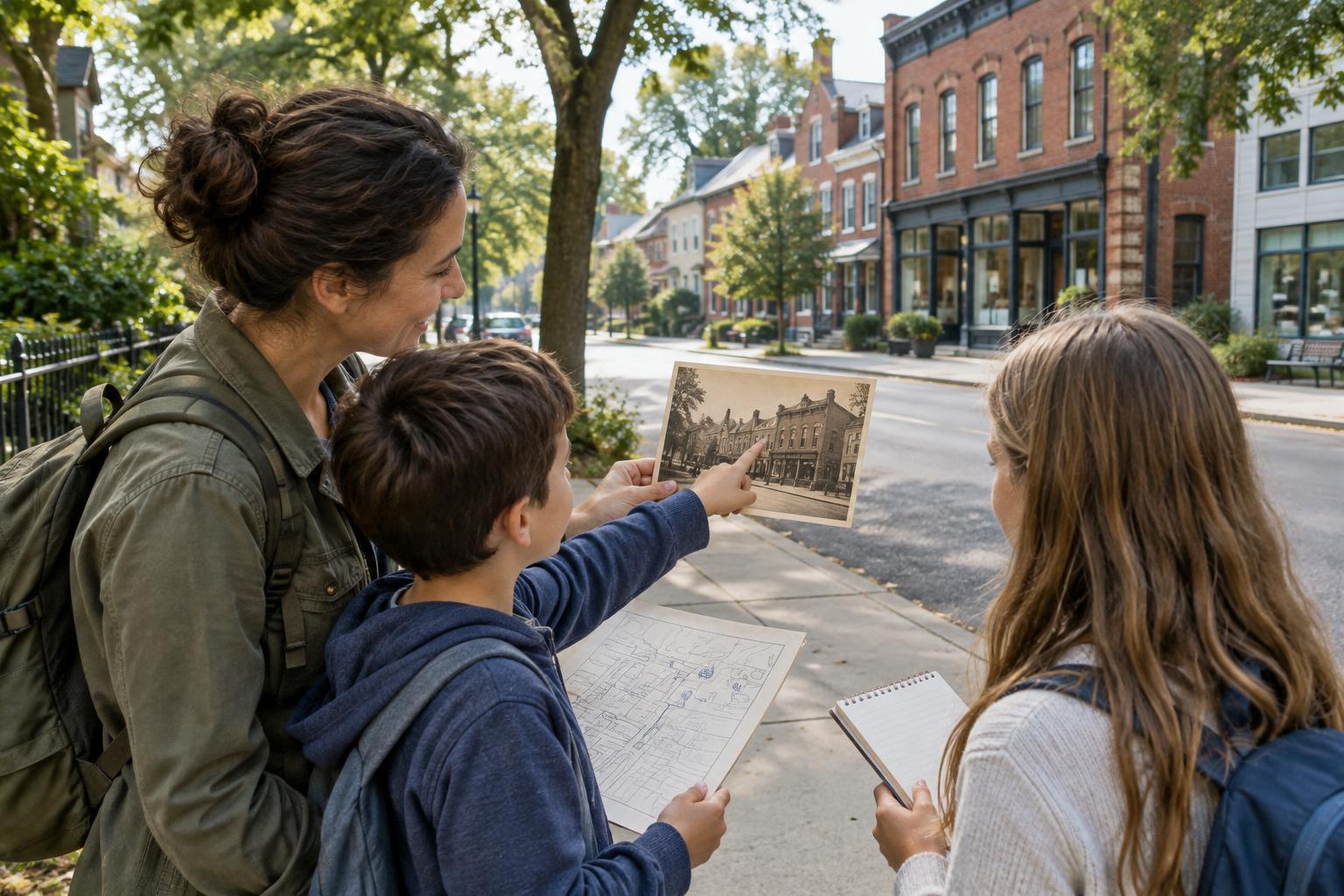
Choose one small subject to explore as a family, such as a park, a school building or a familiar block. On a walk, note any signs, monuments or building names that tell a story about it. Then write down questions rather than conclusions. Who is named? What kinds of work or events are described? Does the account mention people who lived nearby, cared for the place or used it every day? A short list of observations gives children a starting point without asking them to solve the whole neighborhood’s past.
Understand why a written record has gaps
A missing name does not always mean someone was unimportant. Records are created for particular purposes: a property document tracks ownership, for example, while a school newsletter may focus on students and staff. Neither is a complete account of community life. Some materials may never have been written down; others may have been lost, kept privately or described using language that is unfamiliar today.
It also matters who had the chance to create records and whose work was considered worth preserving. A public account may emphasize officials, donors or building projects while saying little about renters, workers, children or people who organized informally. These are possibilities to investigate, not facts to assume about any particular place. Ask, “What was this source made to record?” and “Who might it leave out because of that purpose?”
Compare sources without rushing to fill the blanks
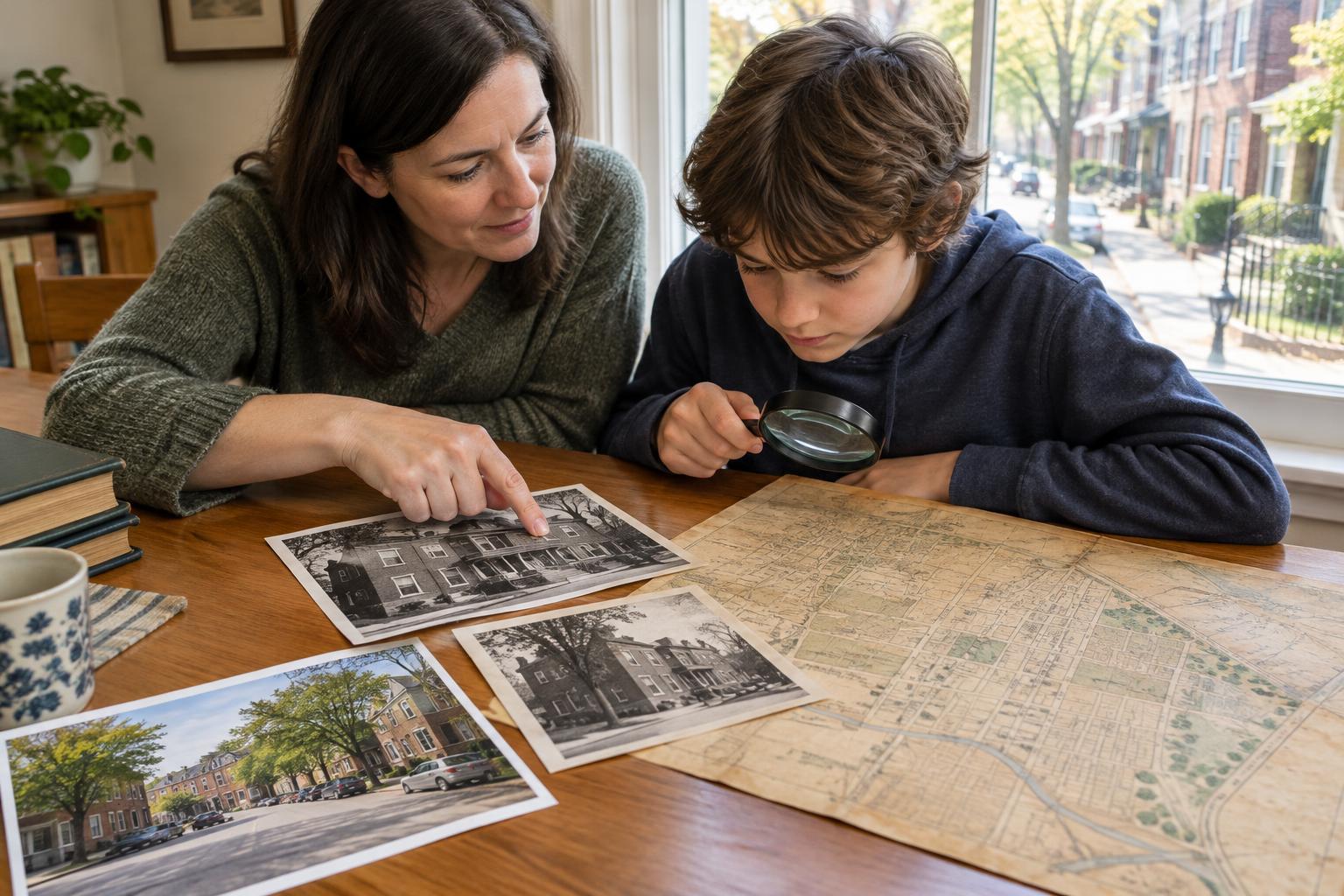
Try placing two or three accounts of the same place side by side. These could be a public sign, an old map available through a library and a community organization’s published history. Look for names, activities and dates that appear in one account but not another. Children can make a three-column page labeled “What we found,” “What we wonder” and “What we would need to check.” This separates evidence from guesses.
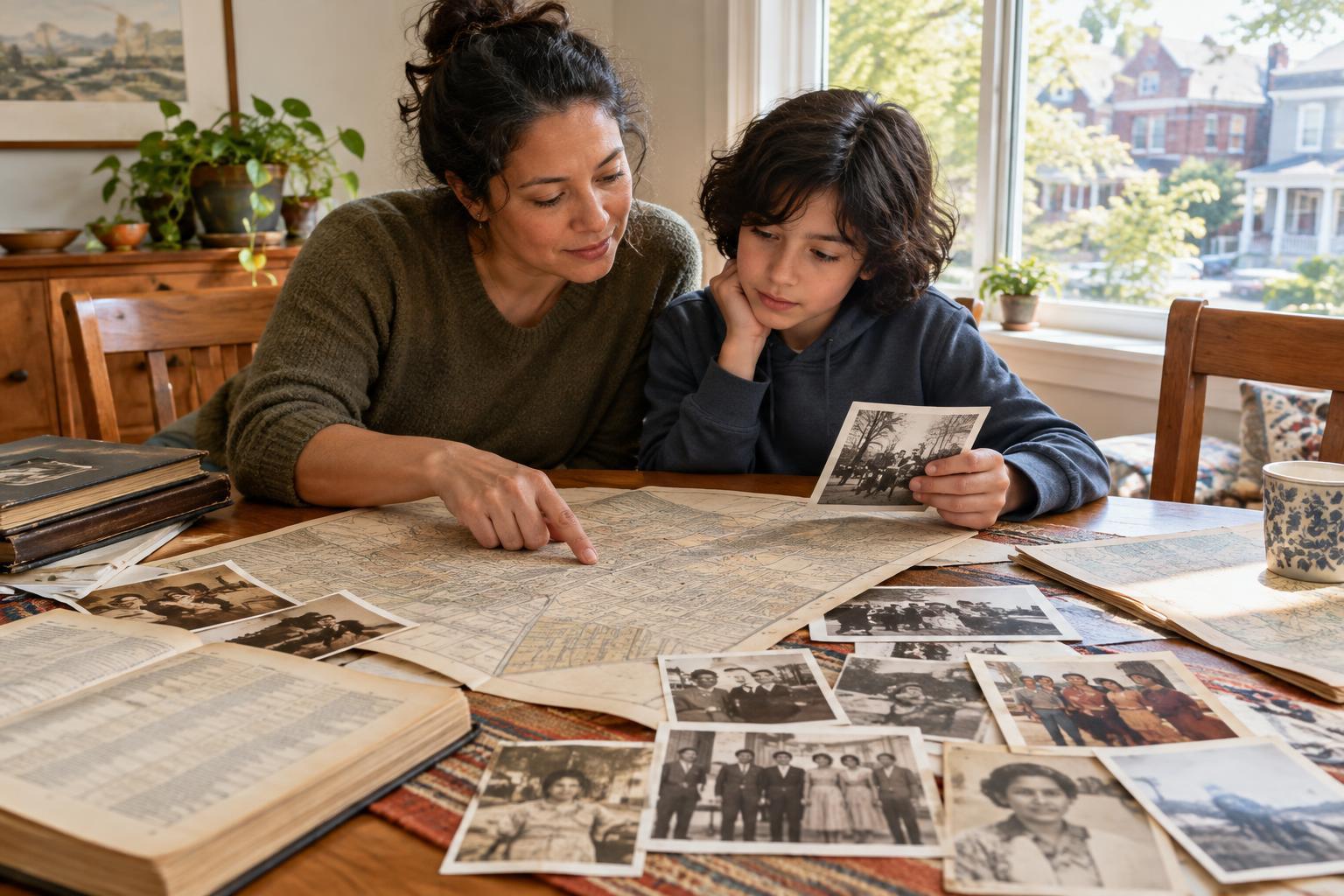
Read each source for its limits as well as its details. A map may show where a building stood but not what it felt like to spend time there. A photograph may show people whose names are unknown. Avoid identifying people or assigning them roles based only on appearance. If two sources disagree, keep both descriptions in your notes and look for more context. “We don’t know yet” is a useful finding, not a failed investigation.
Make room for living memories respectfully
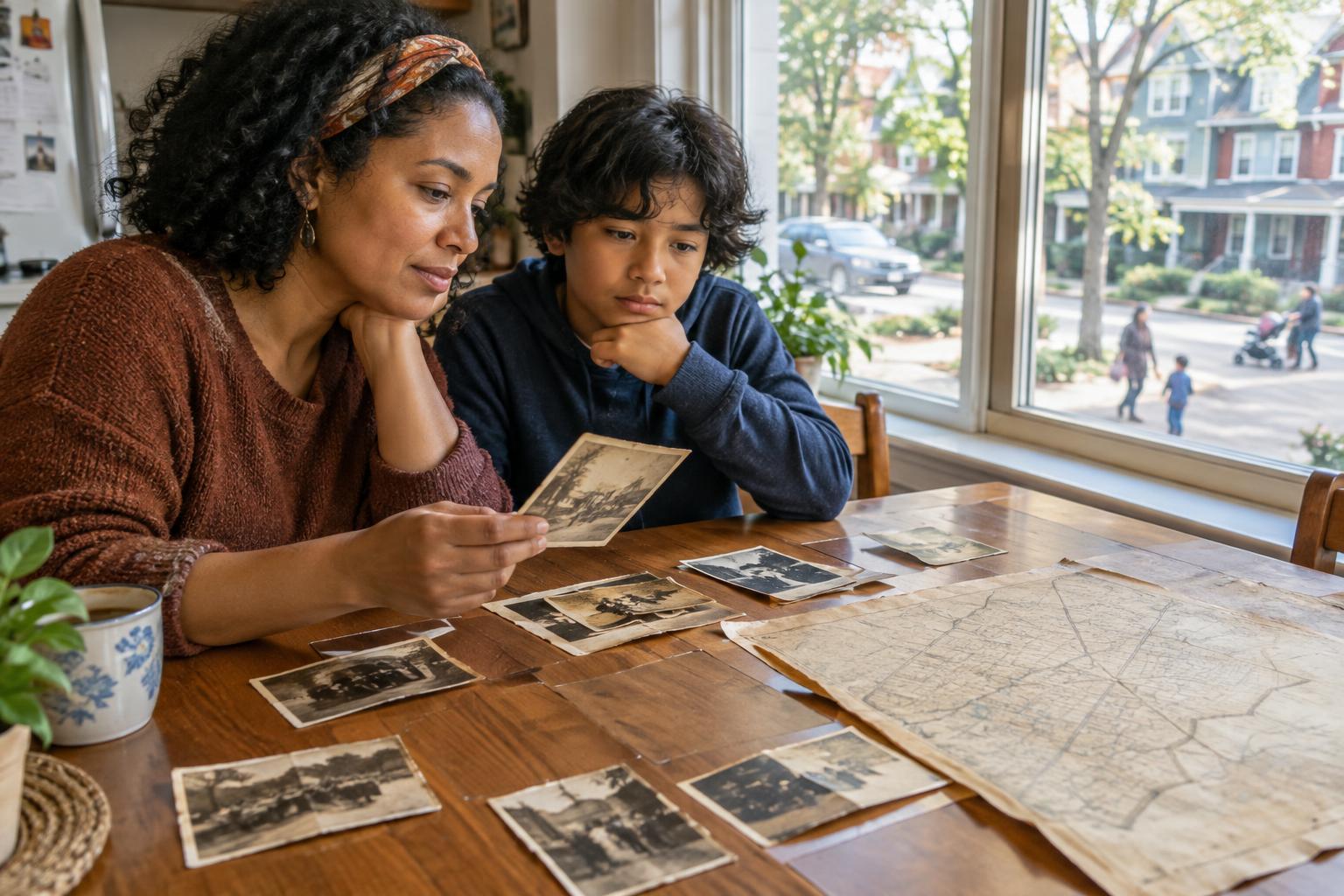
People who know a neighborhood may remember everyday experiences that do not appear on a plaque: a gathering place, a local business or a shared tradition. If someone you already know wants to talk, ask open questions such as “What places mattered to you here?” or “Has this block changed in a way you remember?” Listen without treating one person’s memory as the voice of an entire community.
Participation should always be optional. Do not ask children to approach strangers for stories or pressure anyone to share personal experiences. Before recording, photographing, quoting or posting someone’s words, explain how the material would be used and ask permission. If permission is unclear, keep the conversation private. When a memory differs from a written source, note the difference rather than declaring one account wrong; both may reflect distinct perspectives or time periods.
Share what you learned—and what remains unknown
A family investigation can end with a simple annotated map or a one-page display. Mark the places you examined, list the sources you used and distinguish confirmed details from open questions. You might write, “This sign names the building’s founder; we have not yet found an account of the people who used the space.” That wording points to a gap without inventing an answer.
The goal is not to produce a definitive history in an afternoon. It is to notice how stories are selected, learn to check what a source can tell you and stay curious about experiences beyond the most visible names. A careful question can open the door to further reading, another neighborhood walk or a conversation that someone freely chooses to share.